Together With

👋 Hello, Best Ever readers!
In today’s newsletter, CRE feels the World Cup crunch, China’s $295 billion bet, offices trade at 90% off, construction surges (sort of), lenders get competitive, and much more.
Today’s edition is presented by QC Capital. QC Capital is targeting up to 12% returns by applying institutional-grade underwriting to express car wash operations — membership-driven, automated, and built for scale. Learn more.
▶️ Justin Spillers has paid every investor on time for 10 consecutive years across 850+ units. And next week he's opening up his own portfolio to show you exactly how. Join us June 18 at 1pm ET to see what genuine operational control looks like in practice. Claim your spot.
Let’s CRE!
🛢️ Crude Awakening: Oil prices have surged 30% since the Strait of Hormuz closure choked off 20% of global supply, with construction material costs projected to climb 15% to 20% if crude holds near $100 per barrel.
🏨 Hotel Hesitation: Hotel investment sales fell 35% YoY to $1 billion in April as stagnant rates and political volatility kept capital sidelined, even as trailing 12-month volume climbed 19% to $29.9 billion.
📊 Steady Returns: Institutional CRE returned 1.2% in Q1 as the retail sector led all property types at 2.2%, with gateway apartment markets outperforming Sun Belt metros still absorbing record deliveries.
🏘️ Values Diverge: Apartment values have fallen roughly 10% nationally from 2022 peaks, according to RealPage, but Sun Belt workforce housing and Class C assets have dropped as much as 30% while coastal Class A has slipped just 7% to 8%.
💰 Lender Frenzy: CRE lender competition has hit record intensity, with JLL's new Global Credit Intensity Index reaching an all-time high in April as both lender headcounts and winning LTV ratios climbed, creating historically borrower-friendly financing conditions.

The 2026 World Cup kicks off today. It’s the largest sporting event ever staged in North America — 104 matches across 16 cities over 39 days — and an estimated 6.5 million spectators are about to put every property type in their path to the test.
For CRE investors, the tournament is landing unevenly. Retail landlords are positioned for a clear win, hotels are limping into opening day, and multifamily operators in host markets have already made choices whose consequences will outlast the final whistle on July 19.
Hotels Trail the Field: U.S. host cities enter the tournament in last place on occupancy. Vancouver and Guadalajara lead at 48% booked, with Toronto, Mexico City, and Monterrey above 40%, according to CoStar. San Francisco, at 44%, is the only U.S. market to crack that mark — New York sits at 39% despite hosting eight matches, including the final.
Retail Carries the Upside: Houston alone projects 500,000 visitors and $2 billion in economic impact, with food and beverage, entertainment, and sporting goods tenants positioned for the biggest lift. Placer.ai analysis shows the traffic surge extending well beyond host markets, fueling visits to sports bars, party-oriented dining chains, and grocery stores nationwide.
STR Math Tempts Operators: Airbnb rates in some U.S. host cities have hit $6,000 per night, and New Jersey properties near MetLife Stadium are projected to generate as much as $240,000 over the tournament window. In Kansas City, nightly rates for group-stage dates have jumped from $191 to $706 YoY.
The hotel gap has identifiable causes. Resale tickets to the final have topped $20,000, and New York transit officials initially priced a round-trip train from Manhattan to MetLife Stadium at $150 before cutting it to $98 — still nearly eight times the cost on an NFL game day. Visa concerns and stories of travelers detained at U.S. airports have pushed international fans toward Canada and Mexico, where nightly rates run a fraction of U.S. prices.
Hoteliers haven't conceded the tournament, though. The CoStar snapshot dates to June 1, and historical patterns show up to 40% of World Cup bookings materialize within six days of a match. Host Hotels & Resorts, with properties in 10 U.S. host markets, is already seeing a 38% jump in average daily rates for the tournament period, even where occupancy holds flat.
Multifamily has its own precedent to study. After SoFi Stadium opened in Inglewood, a wave of short-term rental conversions pulled units off the long-term market and nearby apartment rents climbed 50%. Most never returned to traditional leases — the question now is whether host markets repeat the pattern at scale.
Secondary markets may capture the most durable gains. Kansas City, Philadelphia, and Atlanta have each used the tournament as a hard deadline, accelerating infrastructure, transit, and mixed-use projects that will keep producing value long after the trophies are handed out.
The 2026 World Cup resolves in five weeks, but its CRE effects won't — host-market rent rolls this fall will reveal how many converted units actually return to long-term inventory, and the infrastructure built on World Cup deadlines in Kansas City, Philadelphia, and Atlanta will still be generating tenant demand when the next mega-event cycle begins.

In the current market, sophisticated investors recognize that "staying the course" often requires looking beyond traditional asset classes. QC Capital has built their reputation on institutional-grade underwriting and a dedicated focus on operational excellence. Today, they are applying that same disciplined framework to the express car wash sector.
The QC Capital Car Wash Fund offers a unique opportunity to diversify into membership and service-based retail. Targeting up to 12% returns alongside significant tax benefits, this fund bridges the gap between traditional real estate and high-velocity business operations.
Unlike passive assets, express car washes thrive on throughput and precision. They specialize in transforming these daily-need assets into scalable platforms by applying institutional-grade management and automated operations. They focus on brand architecture and data integrity, and they drive profitability where others see only a service business. Partner with an operator that prioritizes straight-talk transparency and operational excellence.
Discover how QC Capital is bridging the gap between sophisticated private equity and essential retail services.
EXPLORE FUND DETAILS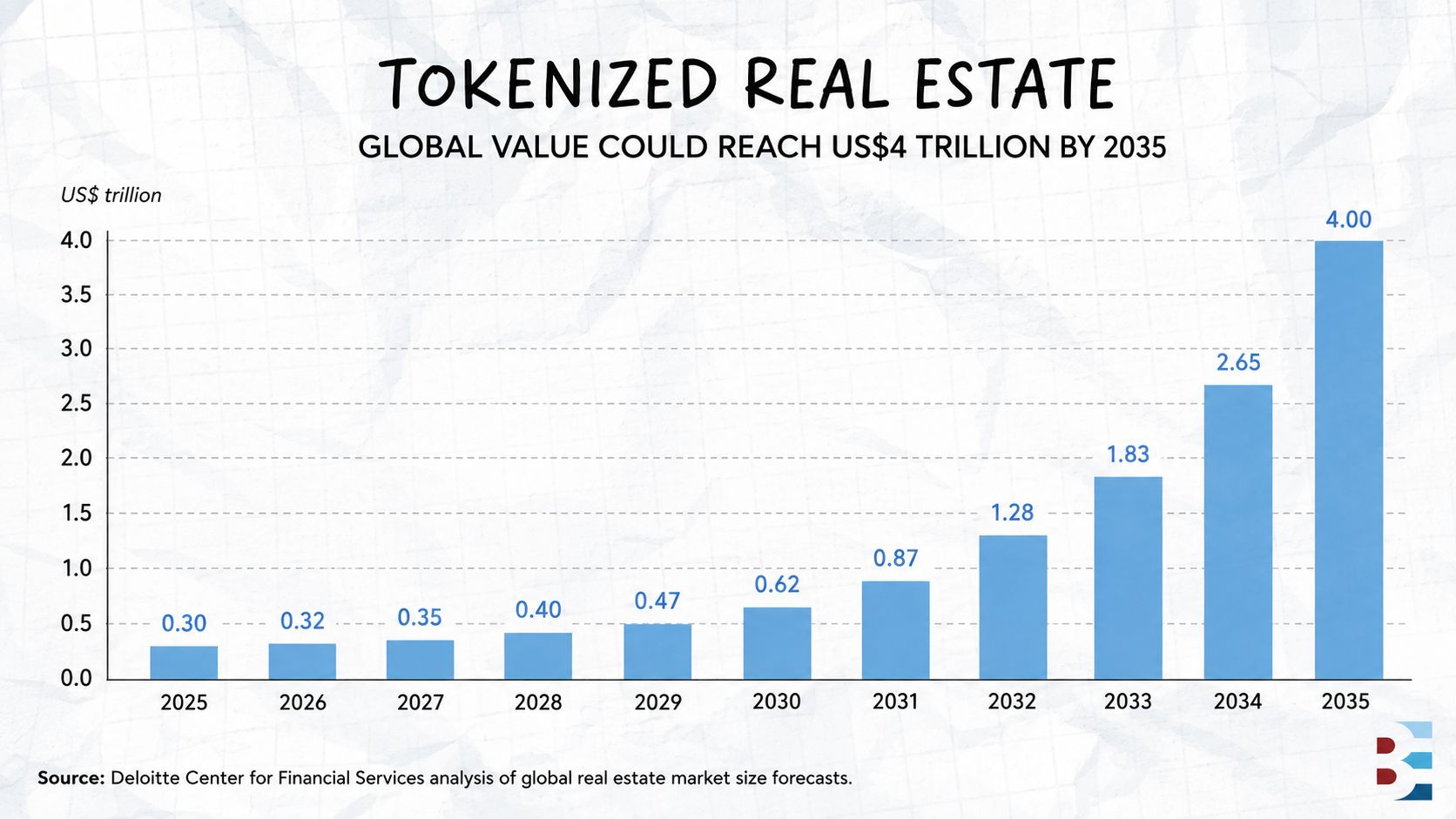
Tokenized real estate is projected to reach $4 trillion by 2035, up from less than $300 billion in 2024 — a 27% compound annual growth rate. Tokenized debt securities are expected to dominate at $2.39 trillion, with private real estate funds contributing roughly $1 trillion.
Some U.S. office buildings are now selling at discounts of more than 90%, including a 485,000 SF Chicago tower that traded for $4 million after fetching $68.1 million a decade ago. Distressed office sales reached $5.2 billion last year across 204 buildings, up from 133 in 2024.
Deeper Discount: The Denver Energy Center sold for $5.3 million after a foreclosure, a 97% markdown from its $176 million sale price in 2013.
Commercial construction planning jumped 41.2% YoY in May, but strip out data centers and that gain shrinks to 6.6%. The Dodge Momentum Index rose 5.9% MoM, building on April's 6.2% gain, as healthcare projects accelerated and traditional office and retail planning gained traction after a sluggish start to the year.
China is preparing to spend $295 billion over the next five years on a nationwide network of AI data centers, funded largely through ultra-long-term sovereign bonds. Plans call for domestic suppliers to provide at least 80% of the technology, and integrating the power grid could push total investment past $700 billion.
Spending Context: Meta and Microsoft alone are setting aside $725 billion for AI this year — more than double what China plans to spend over five years.
Remote work can explain 64% of the rise in unemployment among young college graduates, whose jobless rate climbed 20% from pre-2020 levels while older graduates' rates dipped. Feedback and mentorship taper sharply on distributed teams, pushing firms to reserve remote roles for experienced hires.
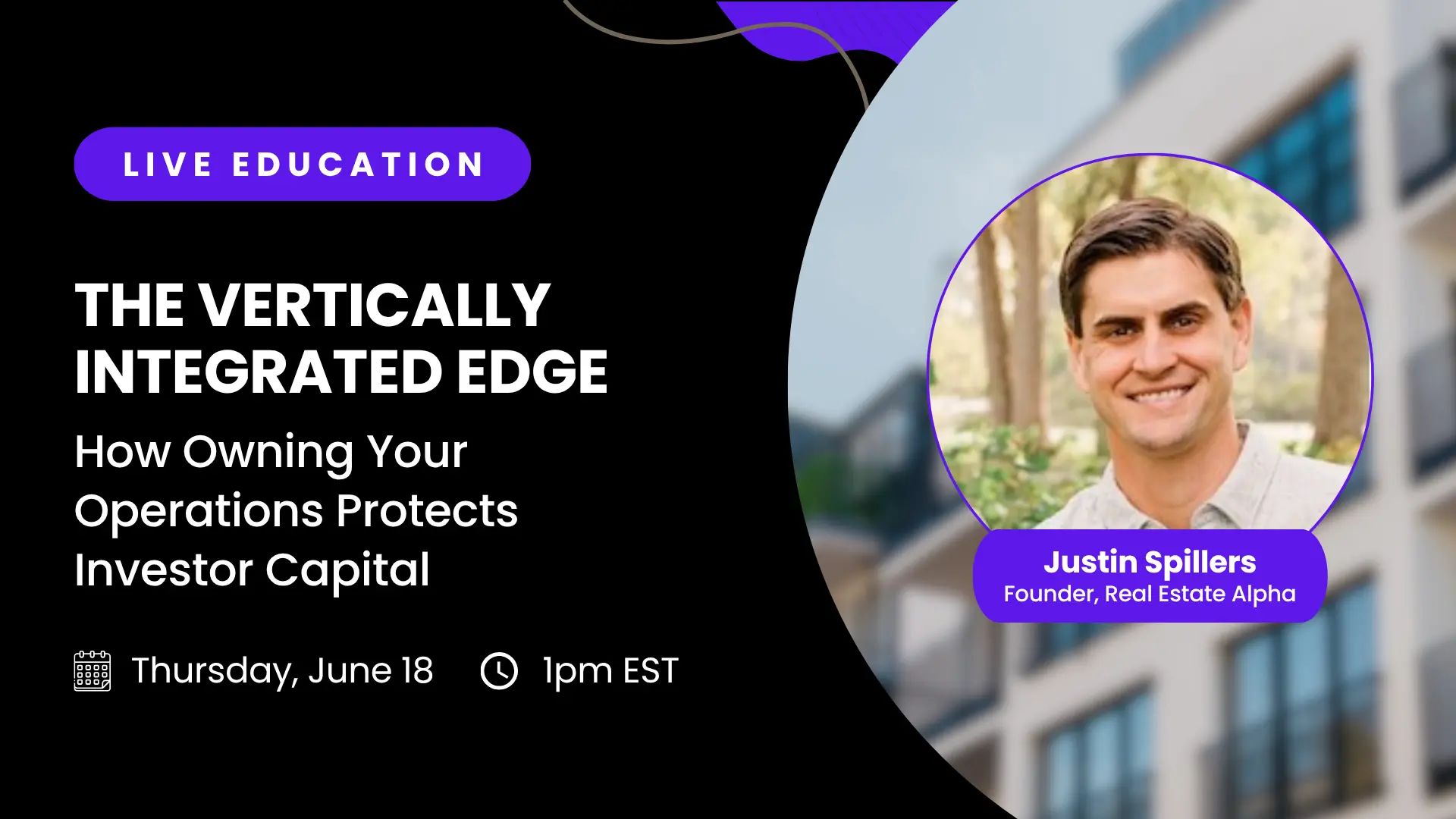
Most operators talk about protecting investor capital. Very few are built to actually do it when things get hard.
Justin Spillers has paid every investor on time for 10 consecutive years across 850+ units. Not because markets cooperated, but because he owns every layer of the operation. In our next live education session, Justin is going to use his own portfolio as a live case study to show you exactly what vertical integration looks like in practice and why it changes your risk profile entirely.
You'll walk away knowing:
📌 How vertical integration protects your investors when markets turn
📌 The red flags operators overlook when building their own structure
📌 How to stress-test your downside plan before your investors do
REGISTER HERE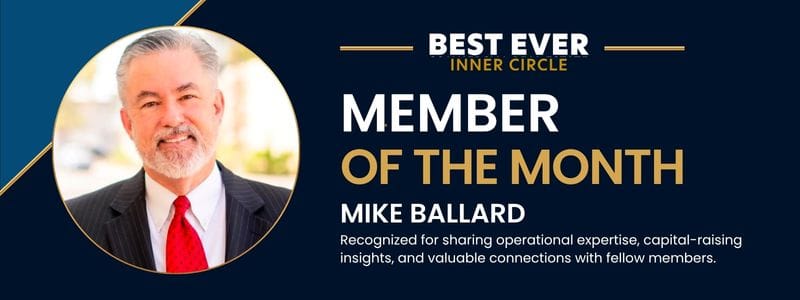
The strength of any community comes from the people willing to share what's working, what's not, and the lessons they've learned along the way.
🎉 This month's Member of the Month is Mike Ballard.
From sharing capital-raising strategies and lender relationships to making introductions and helping members think through acquisitions, financing, and operational challenges, Mike has become a trusted resource within the community. His willingness to openly share lessons learned from decades of experience has helped fellow members make better decisions and uncover new opportunities.
Members like Mike are a big part of what makes the Inner Circle valuable.
Congratulations, Mike! Thank you for your continued contributions to the group.
LEARN MORE ABOUT THE INNER CIRCLE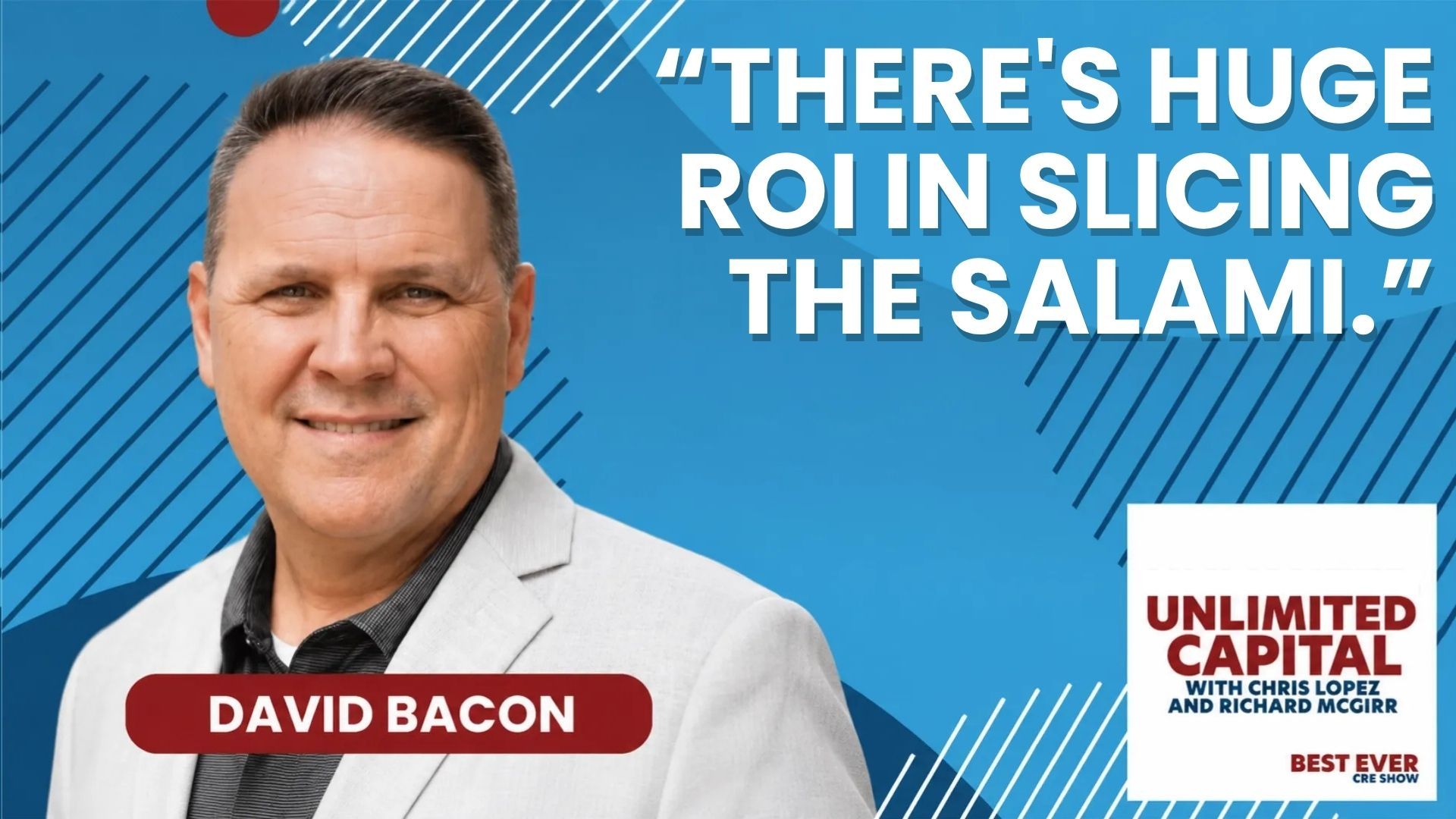
The cost of hiring a data scientist used to be the dividing line between big shops and small ones — a $20,000 engagement, a month of waiting, and a deliverable that answered last quarter's question. AI has erased that line almost overnight, and capital raisers who've noticed are finding patterns in their own CRMs that used to be invisible.
This week on the Best Ever CRE Show, David Bacon, head of marketing at Worthy Financial, joined host Richard McGirr for a conversation about what happens when the cost of investor analytics drops to nearly zero. Worthy raises through fully digital channels — minimums start at just $100, and the platform has grown past $280 million in assets under management — and both Bacon and McGirr shared funnel lessons that translate directly to GPs raising at any scale.
Mining the Re-Up: McGirr's AI analysis of seven quarters of data found 66% of capital raised in any given month comes from existing investors, and 30% make a second investment within 60 days — right when their second distribution lands. His sales team now runs call blocks against that window.
Trends in the Transcripts: AI review of McGirr's sales calls surfaced an unexpected pattern: A prospect mentioning their wife preceded 36% of closed-lost deals. So the fix came straight from enterprise sales. When a prospect names a decision-maker, get them on the next call.
Sophistication Over Scale: McGirr's 400-signup webinar with a financial influencer produced nothing, while his smaller session with educated investors converted. Bacon sees the same split. Sponsorships aimed at pre-educated audiences take off, while cold ones nosedive.
The pattern across every example is the same. The insight was always in the data — the re-up window, the closed-lost signal, the audience mismatch — but extracting it required budget and headcount that most capital raisers don't have. Now the barrier is simply knowing what to ask, and the operators who ask first will out-raise the ones still waiting on reports. As McGirr puts it, "There's huge ROI in slicing the salami."
👉 Listen to David’s full episode with Richard here.
🙏 Thanks for reading!
Stay in the loop with us! If you received this newsletter from someone else, subscribe here. You can also find us on LinkedIn, Instagram, and YouTube.
Have a Best Ever day!
— Joe Fairless