Together With

👋 Hello, Best Ever readers!
In today’s newsletter, LaaS comes for multifamily, a $1.4 billion refinance, tariffs get cut, industrial power shifts, and much more.
Today’s edition is presented by M1 Real Capital. Built through $3B+ in transactions and trusted by 1,000+ operators, fund managers and capital allocators. M1 Real Capital installs the systems used to create predictable private capital. Book a Capital Constraints Call to diagnose exactly where your raise breaks and what needs to be fixed.
▶️ TODAY at 1 pm ET, Equity Trust's Paul Herbes walks you through the retirement structures showing up most in private investing right now and what every sponsor and fund manager needs to know before their next raise. Save your spot.
Let’s CRE!
🏗️ Tariff Relief: The White House has cut import taxes on construction equipment from 25% to 15% starting June 8, with a 10% rate available for products made from at least 85% U.S. aluminum or steel.
🌊 War Ripple: The U.S.-Iran conflict has pushed the 10-year Treasury yield up roughly 30 bps since early March to 4.3%, with Colliers warning that selective liquidity and conservative underwriting will persist as retailers bulk up warehouse space to hedge supply chain risk.
🌧️ Climate Flight: Insurance premiums tied to climate risk have begun reversing Sun Belt migration trends, with Texas, Arizona, and Florida posting net out-migration as every 10% rise in premiums drives roughly a 4.6% drop in property values.
🏀 CRE Town: The Dallas Mavericks have selected 104 acres of a former mall site for a new mixed-use arena district, targeting a 2031 opening when the team's current lease expires. The Dallas Stars plan a similar $1 billion mixed-use district in Plano.
🤝 All In the Family: Institutional investors are pursuing joint ventures with family offices to access off-market CRE deal flow, as roughly $144 billion in sidelined capital returns to the market and family office real estate allocations have climbed from 2.6% to 21% of assets since 2007.
For over a decade, the apartment industry's business model has been essentially unchanged: Sign a 12-month lease, pay utilities separately, furnish the unit yourself, and pay a penalty if life forces you out early. The demographics driving that model — younger renters, short-term tenants, people working toward homeownership — have shifted dramatically. The model itself has not.
A new report from Deloitte's Center for Financial Services argues that this is about to change.
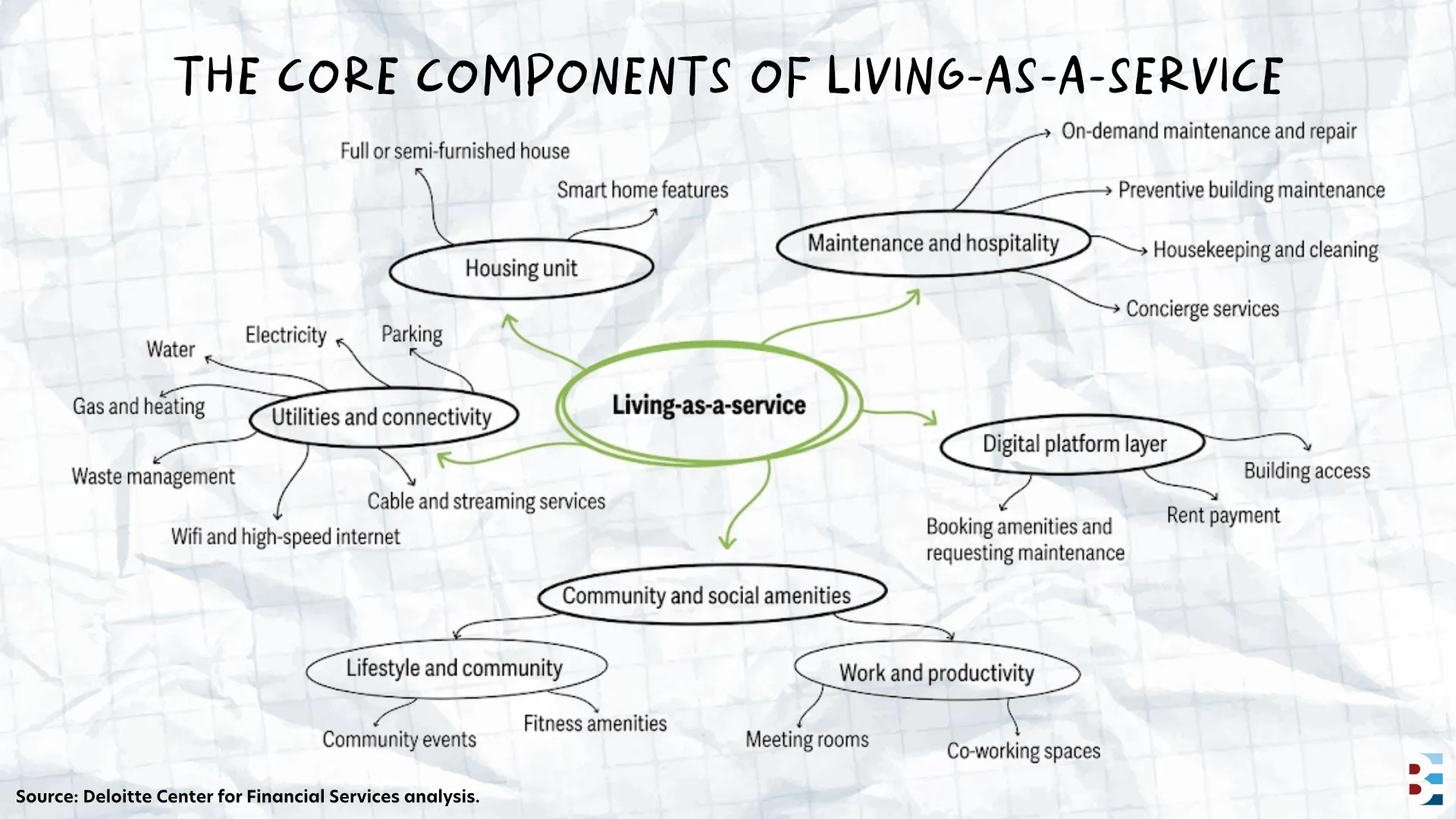
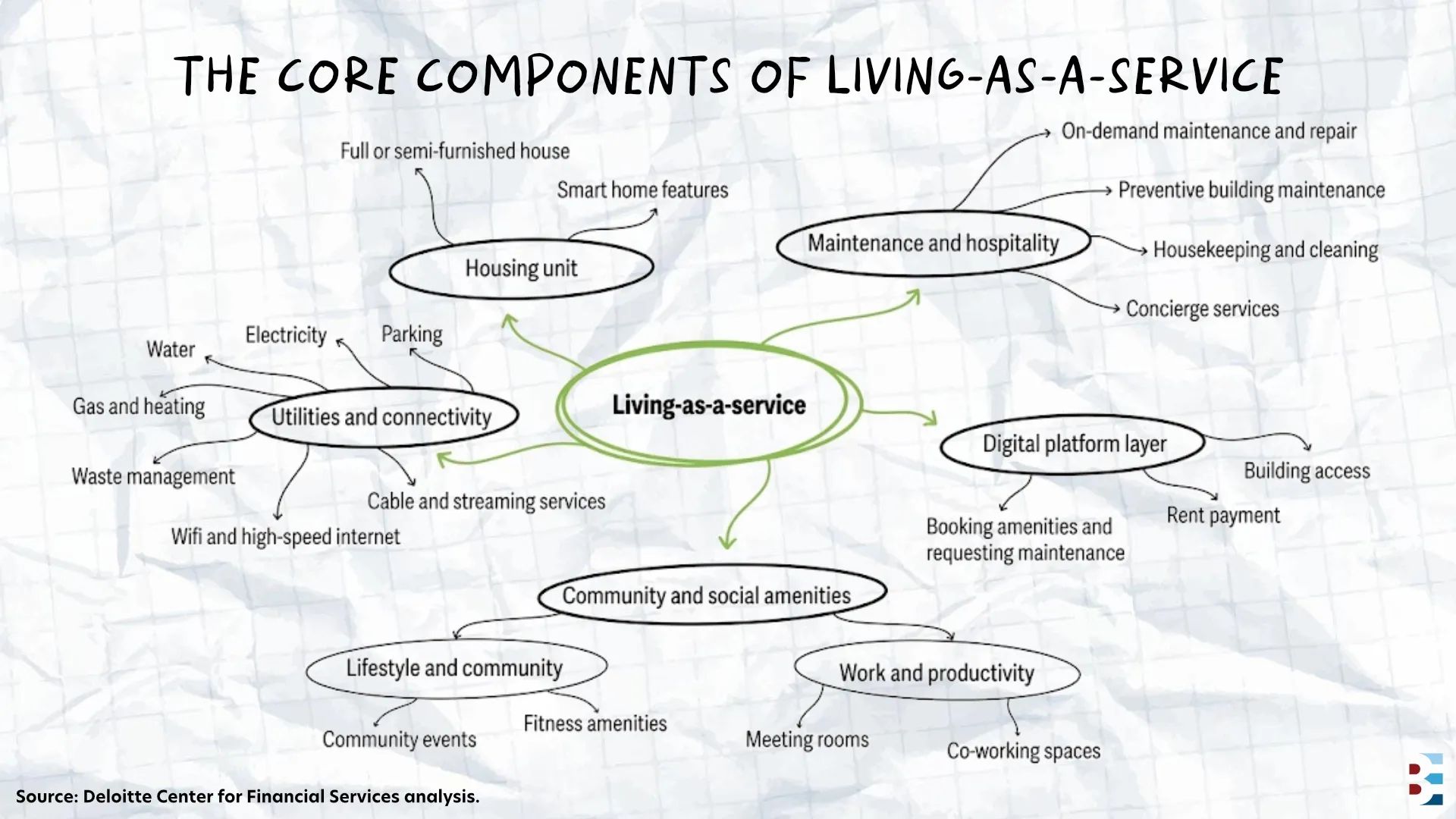
The concept is called living-as-a-service, or LaaS — a direct nod to the software-as-a-service model that reshaped the tech industry. Under LaaS, rent, utilities, maintenance, housekeeping, and furniture are bundled into a single monthly payment. Renters can move between units within a landlord's portfolio with 30 to 60 days' notice, no moving trucks required, no new utility accounts to open, no lease-break penalties to absorb.
For operators with large, multi-market portfolios, it is a fundamental reimagining of what an apartment lease is, and there is a demographic case for the shift.
The Renter Profile Has Changed: First-time buyers are entering the market later than ever, with NAR pegging the median age at a record 40. The share of renters 65 and older grew 30% between 2013 and 2023, adding 2.4 million renters to the market. High-income renters are growing fastest — the number of renters earning $1 million or more annually rose 204% between 2019 and 2023, outpacing the 169% growth of homeowners in that bracket.
The Flexibility Premium Is Real: Remote work accelerated a pattern of city-to-city mobility that a 12-month lease with a break fee directly punishes. LaaS removes that friction. A renter moving between a landlord's Chicago and Denver properties would carry their bundled services with them, with no gap in coverage and no administrative restart.
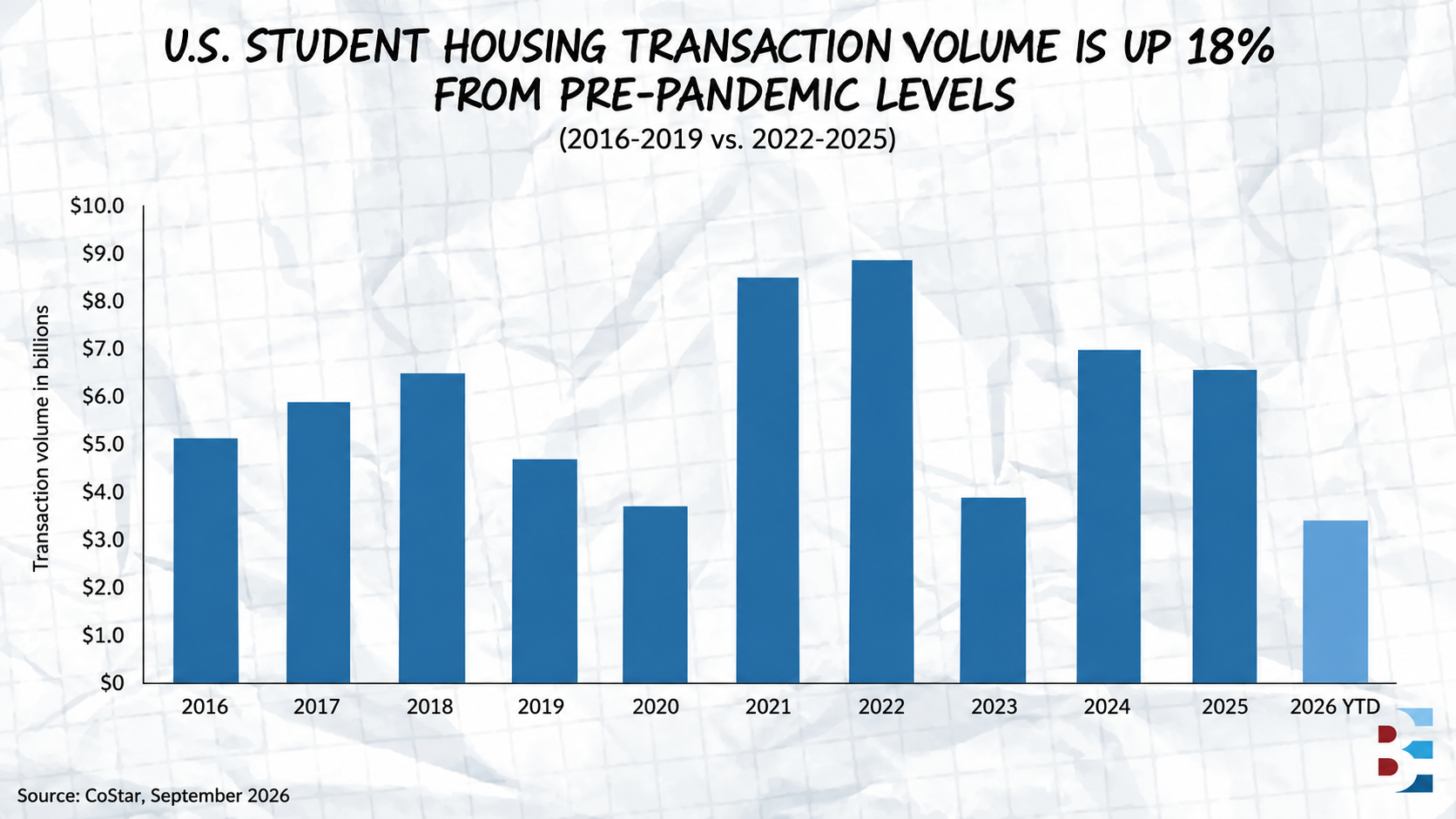
The Landlord Math Works: Even modest adoption across a large portfolio could generate meaningful ancillary revenue through bundled services while improving retention. The model is currently under discussion with Deloitte's multifamily clients, though no major national operator has formally adopted it yet. Student housing has already moved in this direction with furnished units and bundled utilities, offering a proof of concept at scale.
LaaS is most viable for large owners and operators with units spread across multiple markets — a profile that describes a growing share of institutional multifamily ownership. The AvalonBay–Equity Residential merger, announced last month, would create a 180,000-unit portfolio that is precisely the kind of platform LaaS is designed for.
Multifamily's demand base has quietly shifted toward older, wealthier, longer-term renters who prioritize flexibility over the traditional path to ownership. Operators who can offer a frictionless, subscription-style tenancy — across markets, with no lease-break exposure — are positioned to capture that renter in ways the standard 12-month model cannot.
Most operators think a raise starts when a deal is ready. It doesn't.
The raise starts months earlier in the window when no capital is being requested and no urgency exists. That's where predictable investor flow is built.
Operators who consistently fill raises before they go live aren't better at pitching.
They're better at attracting investors before they need capital. They build demand before a deal exists. They make allocation decisions easier before an opportunity is ever presented.
THE M1 ADVANTAGE
$1M – $100M+ Target Raises | Designed for single acquisitions, portfolios, and fund platforms
506(c) & Institutional-Grade Positioning | We’ve worked with some of the biggest names in the business. Compliant. Professional
9-Figure Capital Raising Track Record | Across multiple funds, structures, and market cycles
WHAT GETS INSTALLED
Investor-Ready Positioning: Your unfair advantage packaged so investors immediately understand why you.
Predictable Investor Flow: Systems that attract accredited investors before a deal is announced.
High-Intent Capital Conversations: No chasing. No convincing. Qualified allocation discussions.
Scalable Raise Infrastructure: Built for repeatability, not one-off wins.
Best for: Syndicators and fund managers building a real platform. Not for deal-by-deal operators or anyone seeking shortcuts.
Identify your raise bottleneck before your next deal goes live.
BOOK A CAPITAL CONSTRAINTS CALL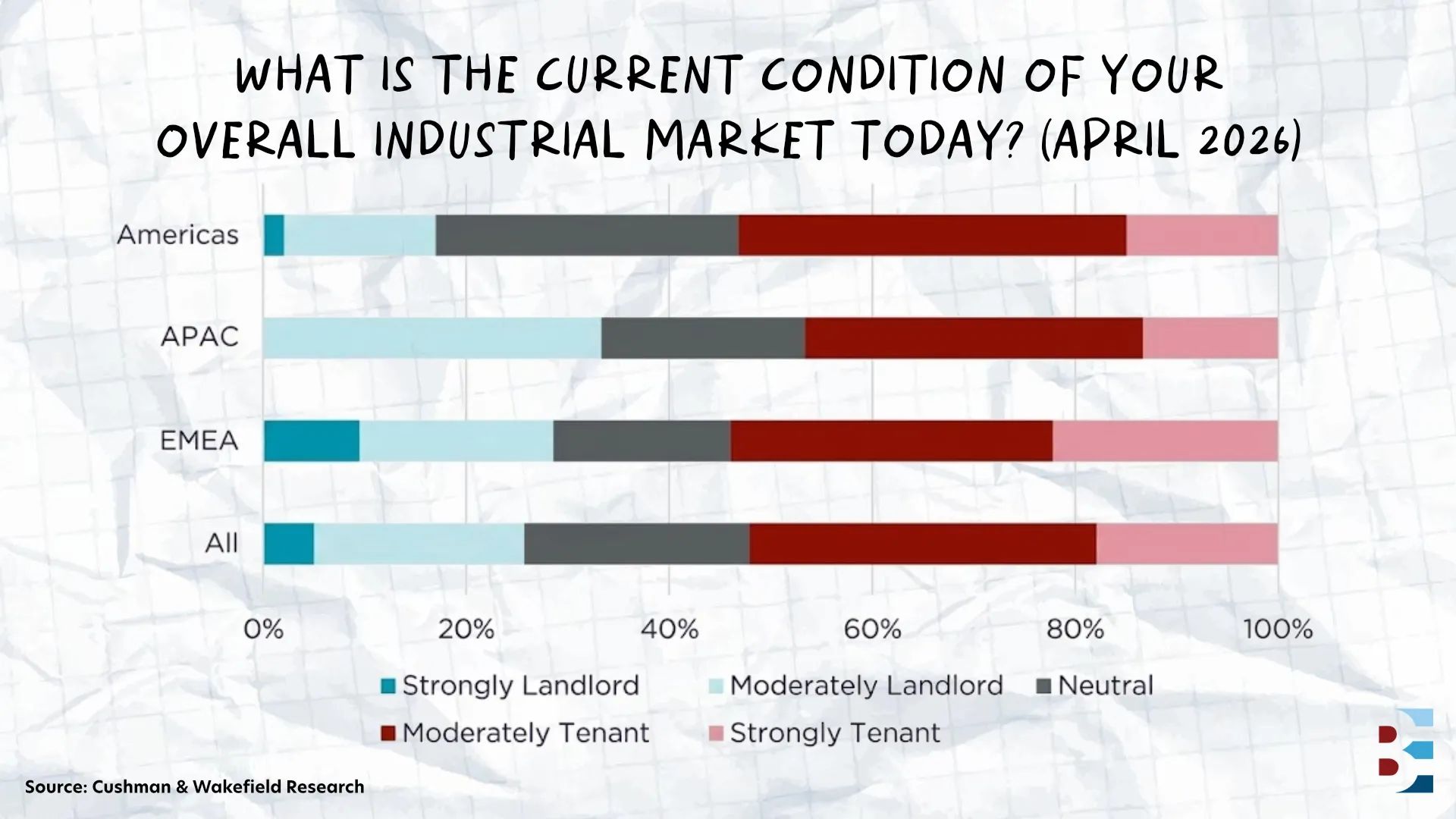
Sixteen of 35 major U.S. industrial markets shifted toward neutral or landlord-favorable conditions over the past year, according to Cushman & Wakefield, as annual absorption rose 35% and quarterly leasing topped 170 million SF for the fourth straight quarter.
Private employers added 122,000 jobs in May, topping economist forecasts of 120,000 and up from a revised 105,000 in April. Gains were broad-based across eight of ten tracked sectors, led by education and health services.
Context: Over 42% of jobs created were part-time, the highest share in five years.
A joint venture led by Related Cos. is finalizing a $1.4 billion CMBS refinancing for 10 Hudson Yards — a fully leased, 1.8 million SF Manhattan tower — with closing set for June 24 at a fixed rate of 5.5% over a 5.5-year, interest-only term.
U.S. office attendance fell to 67% of pre-COVID levels in March 2026, down from a 75% peak in 2025, even as the share of Fortune 200 companies requiring office-first work climbed from 24% to 27%.
Smaller U.S. markets are driving the highest multifamily permitting growth of 2026, with the top five gainers posting year-over-year increases between 233% and 409%, according to RealPage, as developer appetite diversifies well beyond traditional apartment strongholds.
Wild stat: Jackson, MS, led all markets with a roughly 2,000% surge, going from five units permitted to 108.
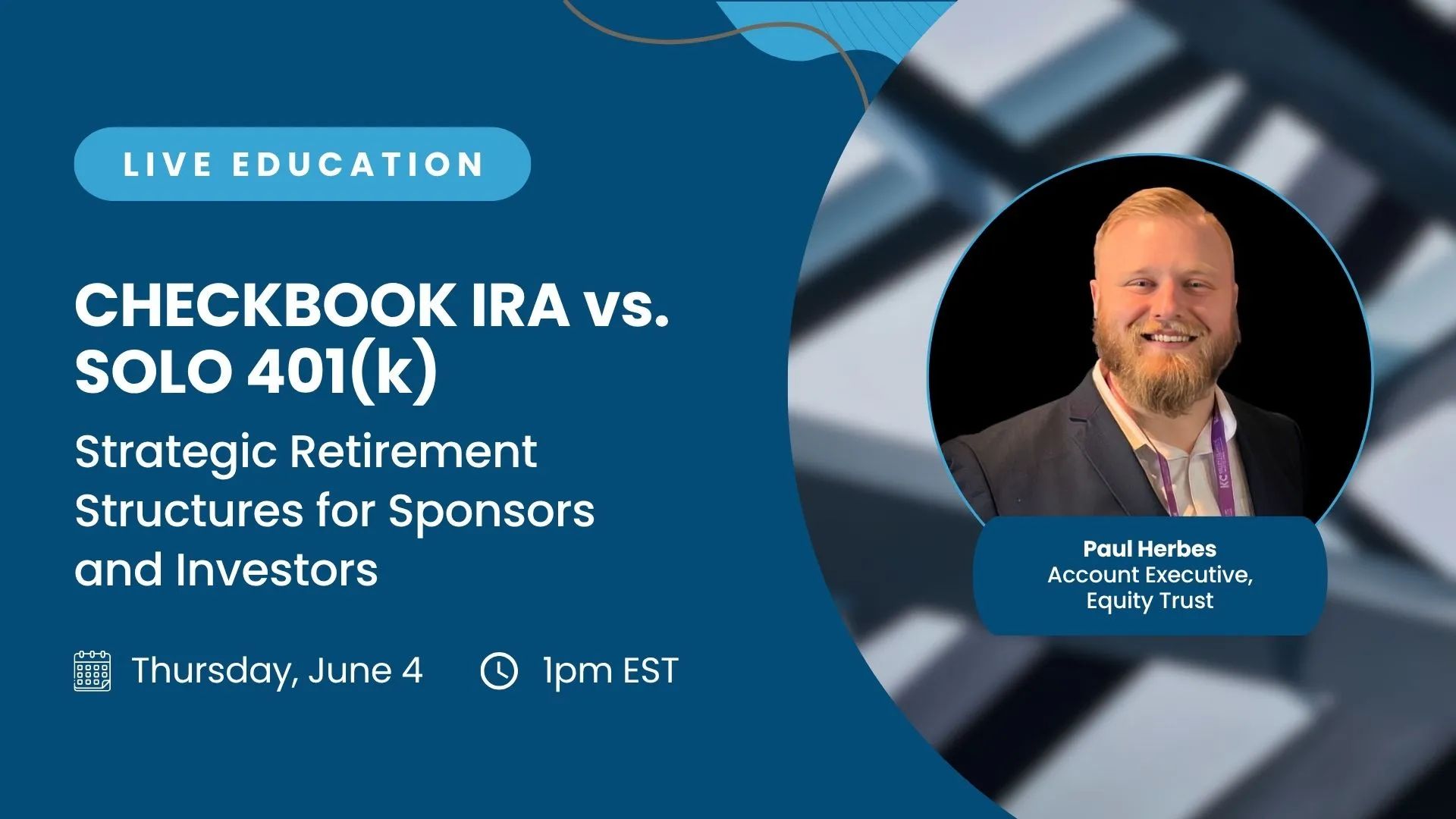
🗓️ TODAY: June 4 at 1 pm ET
Millions of dollars in retirement capital are sitting on the sidelines, not because investors don't want to deploy it, but because most sponsors never bring it up.
Equity Trust's Paul Herbes is joining us today to change that.
In one hour, he'll walk you through everything you need to know about Checkbook IRAs and Solo 401(k)s:
How they work
How investors use them to participate in private offerings
How understanding retirement capital can open doors during your next raise.
Can’t attend live? Register anyways, and we’ll send you the replay.
REGISTER HERE
When a bar and restaurant tenant of five years asked Ash Patel for a 21% rent reduction in exchange for a five-year lease extension, Ash didn’t make a counteroffer. He offered a playbook.
The tenant's numbers were solid, the location was one of the hottest dining suburbs in the market, and the ask was framed as needing "more room to breathe." Instead of adjusting the rent, Ash addressed the underlying problem.
Office Revenue: Six offices above the restaurant were being used as storage. Ash offered to manage them as rentable units — the previous tenant had leased each at $500 per month.
Bar Consulting: Ash's longtime bar partner, with over 20 years in the business, agreed to consult with the tenant as a personal favor.
Restaurant Consulting: Ash brought in a restaurant consultant to revamp the food program — and agreed to cover the fee himself.
Social Media: The person running digital for Ash's own bars would help launch the tenant's social media presence, at Ash's expense.
Renovation Support: The tenant wanted glass garage doors and an updated outdoor patio. Ash offered to cover a large portion of that bill.
Ash’s Plan: Don’t cut rent — grow revenue. Make the tenant more successful. That way, when the lease expires in a year, the tenant is in a position to pay more, not less.
👉 Check out Ash’s breakdown of this scenario here, and listen to him on Beyond Multifamily on the Best Ever CRE Show.
🙏 Thanks for reading!
Stay in the loop with us! If you received this newsletter from someone else, subscribe here. You can also find us on LinkedIn, Instagram, and YouTube.
Have a Best Ever day!
— Joe Fairless