👋 Happy Sunday, Best Ever readers! Spain beat Argentina this afternoon to win the 2026 World Cup. Now that it’s over, we can take a look at what the mega-event really meant for CRE.
In today’s newsletter, World Cup winners and losers, multifamily has a huge Q2, warehouses are so back, retail rents plateau, industrial money flees the Sun Belt, and much more.
🤖 One hour. One expert. Five AI workflows every commercial real estate operator should know. This week, Inner Circle members learned how to build an investor deck, website, and interactive investor report in under an hour. See what else is waiting inside the Best Ever Inner Circle.
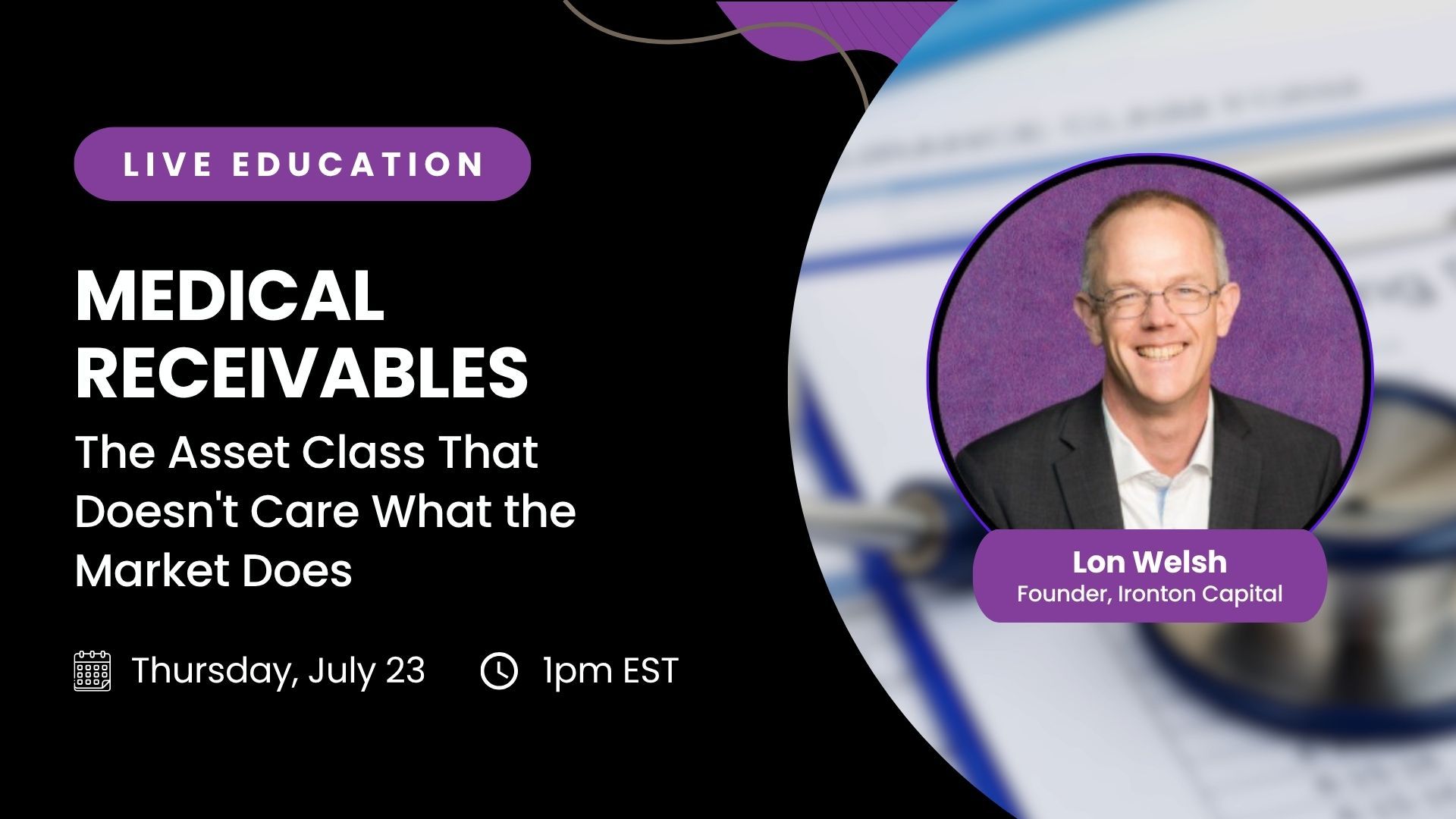
📩 Gold. Crypto. Private equity. Sound familiar? This Thursday, July 23, at 1 pm ET, Lon Welsh introduces medical receivables (an alternative most investors have never considered) and explains exactly how it works. Claim your spot.
Let’s CRE!
📈 Absorption Surge: National multifamily net absorption has hit 124,600 units in Q2, its fifth-highest quarterly total in nearly 25 years, pushing vacancy below 9% for the first time since 2024 even as median asking rents keep sliding.
🌪️ NOI Hit: Multifamily landlords have lost the ability to push rising insurance costs onto renters, as record new supply and decade-high concessions force owners to absorb the hit through lower NOI, weaker valuations, and higher cap rates.
🌽 Midwest Movement: Investors have cooled on oversupplied Sun Belt industrial markets and are chasing modern Midwest industrial instead, drawn by cheap land, available power, and truck routes reaching roughly 75% of the U.S. population within a day's drive.
🛍️ Retail Plateau: U.S. retail asking rent growth has decelerated to 1.6% YoY, its slowest pace in more than a decade, though landlords still capture rent spreads near multi-decade highs when space turns over in high-traffic corridors.
🏠 Affordability Wall: Elevated prices and mortgage rates have kept a median-income household earning just 76% of what a median-priced home requires, sidelining would-be buyers and keeping renters in the pool even as housing availability improves.

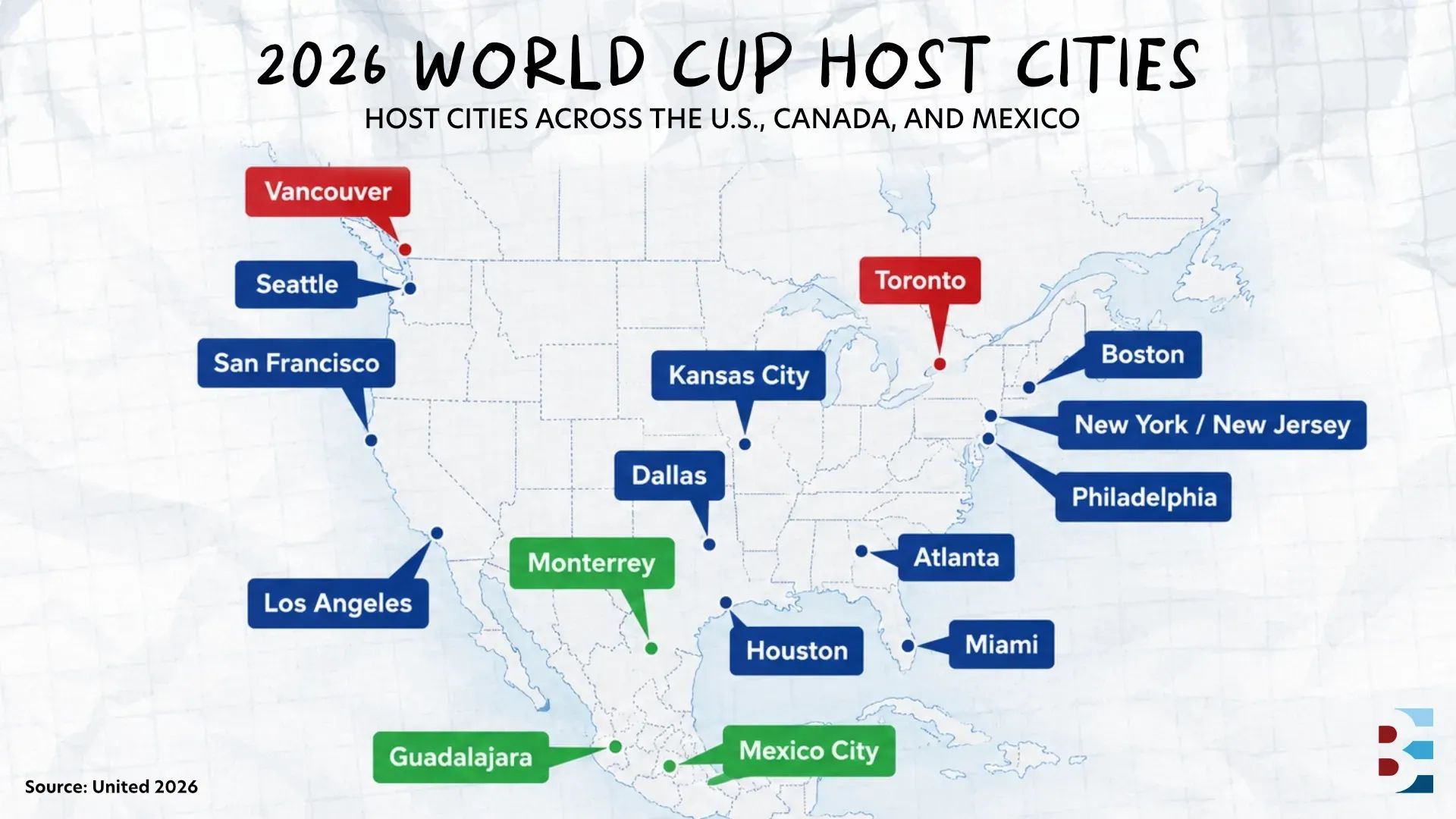
The 2026 World Cup came wrapped in promises — millions of visitors, hotels booked solid, a Super Bowl-sized jolt dropped on 11 U.S. cities at once. Spain lifted the trophy in New Jersey this afternoon, and for most host cities, the payoff came smaller than advertised, with hotels charging far more without filling up.
The split comes down to how hotels make money. Room revenue rises two ways — by filling more rooms or charging more for each — and revenue per available room, the industry's headline gauge, blends both. In the week around the Fourth of July, host-market rates ran about 21% above last year while the share of rooms filled barely moved.
The international fans boosters promised came in thinner than projected — an industry survey in May found nearly 80% of hoteliers across host cities tracking bookings below forecast, held down by steep airfare, record ticket prices, and visa hurdles.
Winners
Kansas City: With one match to host, Kansas City still posted the biggest gain anywhere — weekly revenue per room jumped 49.9%, and more than doubled on match day. The reason is scarcity: with just 1,800 short-term listings, it's the most supply-constrained host city, so a wall of visitors met a small room count and prices spiked. Its short-term rentals filled at 62% for match dates at booked rates north of $430 a night.
Philadelphia: The city stacked its lone match onto the Fourth of July and the nation's 250th-anniversary celebrations, a triple draw that lifted weekly weekend revenue per room 74.3%. Visitors treated it as a base for the wider Northeast and extended their stays — the tournament paid off most where it wasn't the only reason to be in town.
Losers
Most host cities: The standouts were the exception. Across all host markets, occupancy actually ran below 2025 through the tournament's first 17 days — the average host city drew no extra guests from the World Cup, just higher rates on rooms it would have filled anyway.
Miami: Miami went furthest backward, with revenue per room down 6.5% and roughly 15% fewer room nights booked than a year earlier during its matches. Even with rates up, the tournament drew fewer visitors than the ordinary summer tourists it displaced, leaving the city worse off than a normal July.
The winners shared a formula: scarce supply, a second event drawing people to town, or both. Without one, hosting a match mostly meant charging more to the same guests a city would have drawn anyway.
The pattern held beyond hotels. Retail and restaurant real estate saw the same concentrated spike, clustered tightly around venues and match times. Mobility data near SoFi Stadium tracked a 123% surge in sporting-goods visits and a 26% restaurant lift on match days, with nearly half of visitors coming from out of market, though dwell times fell as fans moved fast between bars, stadium, and rentals.
Restaurant and bar spending in host cities ran 5.3% above last year over three weeks in June, ahead of the 3.8% national pace — the districts near a stadium captured most of the gain.
Kansas City shows the limit of that lift. The same scarcity that spiked its hotel rates didn't reach its shops: local businesses reported months of construction, graffiti, and slow foot traffic against an early forecast of $653 million in economic impact that never materialized. A packed hotel block and a busy retail corridor are different bets, and a mega-event doesn't guarantee both.
The next mega-event is already on the horizon, with Los Angeles hosting the 2028 Olympics. The cities that cashed in on the World Cup had tight supply and a second reason to visit beyond the tournament, and their gains came from higher rates, not more guests. Investors looking to capitalize on the L.A. Olympics should model 2028 the same way: as a few weeks of pricing power rather than a lasting demand wave. A deal that depends on the Olympics alone to be profitable is a deal that will likely flop.
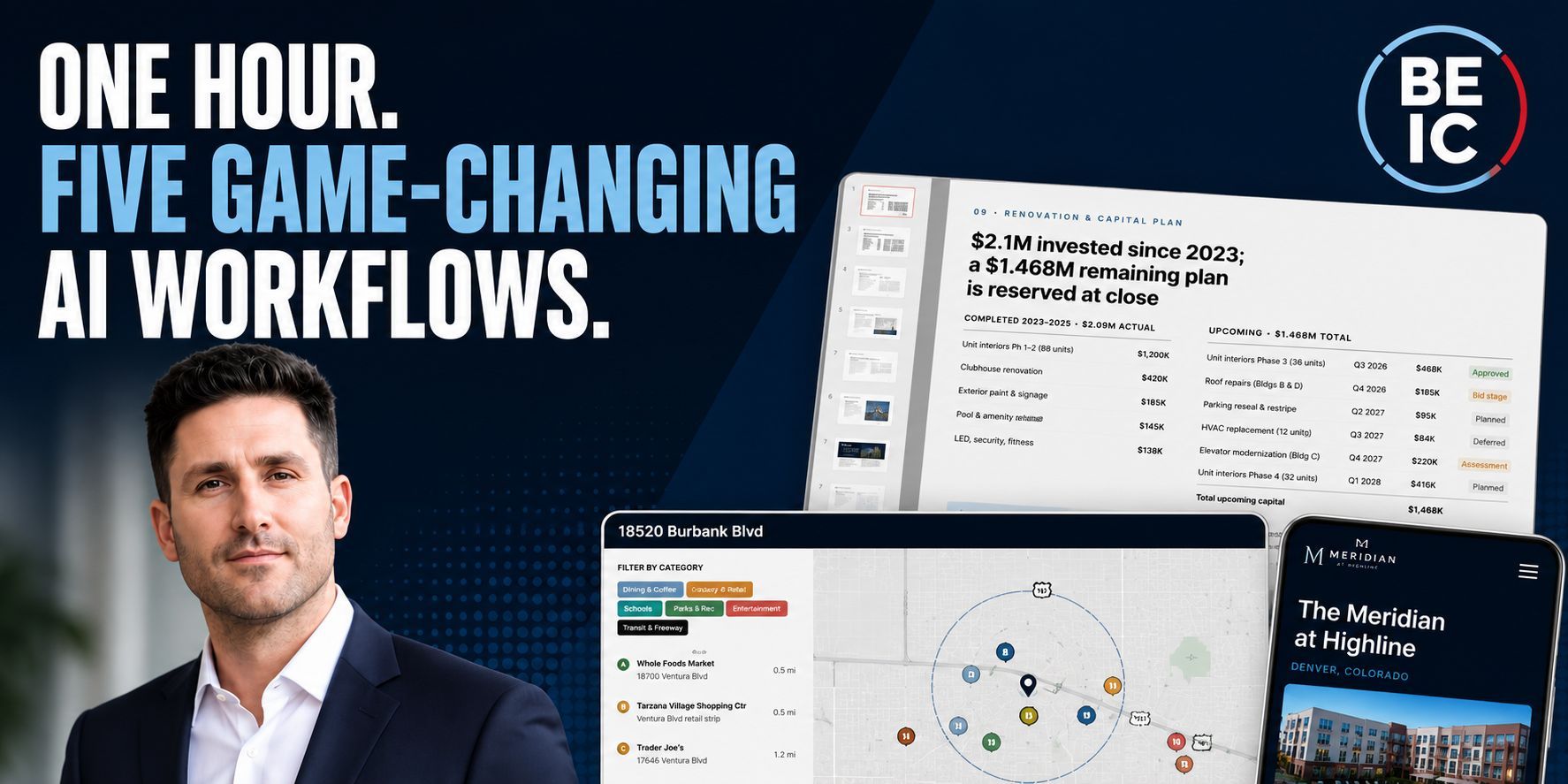
This week, Inner Circle members joined AI for CRE Collective founder Jake Heller for an exclusive, hands-on workshop exploring how artificial intelligence is changing the way commercial real estate operators work.
During the session, Jake demonstrated how to use Claude Design to:
✅ Build institutional-quality investor presentations in minutes
✅ Create polished websites for investment firms and individual deals
✅ Generate interactive market research reports and amenity maps
✅ Turn static quarterly investor updates into interactive web experiences
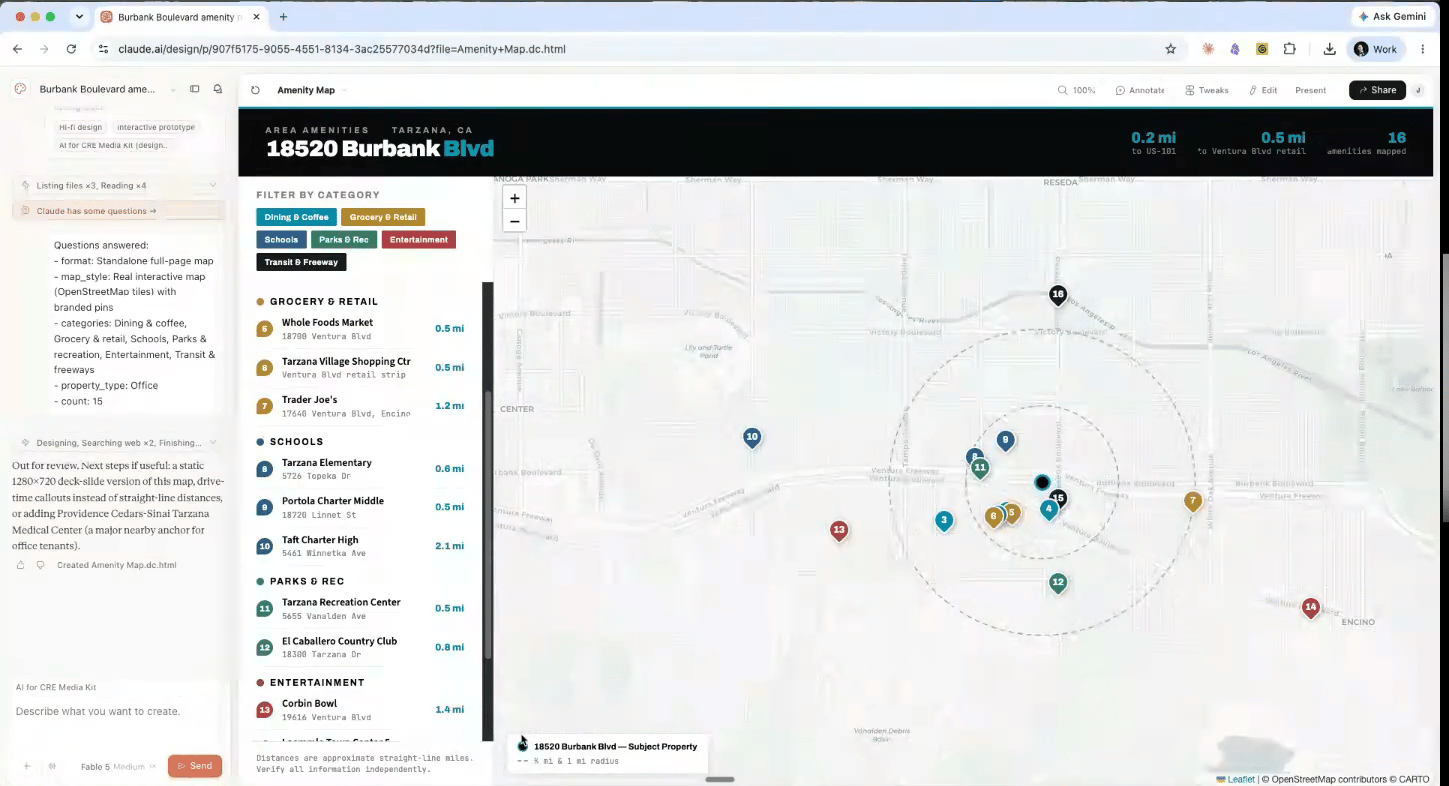
Inside the Inner Circle, our goal is to give members practical strategies they can implement immediately to raise capital, improve operations, market their business more effectively, and stay ahead of what's changing.
And AI is just one example.
Every month, members get direct access to industry experts like Jake who have solutions to the challenges they're facing right now.
If you've been thinking about joining the Inner Circle, this is one of the best times all year.
Join by July 31 to receive:
📢 A complimentary Best Ever Newsletter Sponsorship (a $6,000 value) to our audience of 51,000+ to help grow your brand and attract investors.
📩 An invitation to our August Cincinnati Offsite, where members will spend a full day collaborating, solving challenges, and building relationships before heading to the Reds game together.
If you're an experienced commercial real estate operator looking to raise more capital, find better opportunities, and surround yourself with people who are building at a high level, we'd love to show you what the Inner Circle is all about.
SCHEDULE YOUR INTRO CALL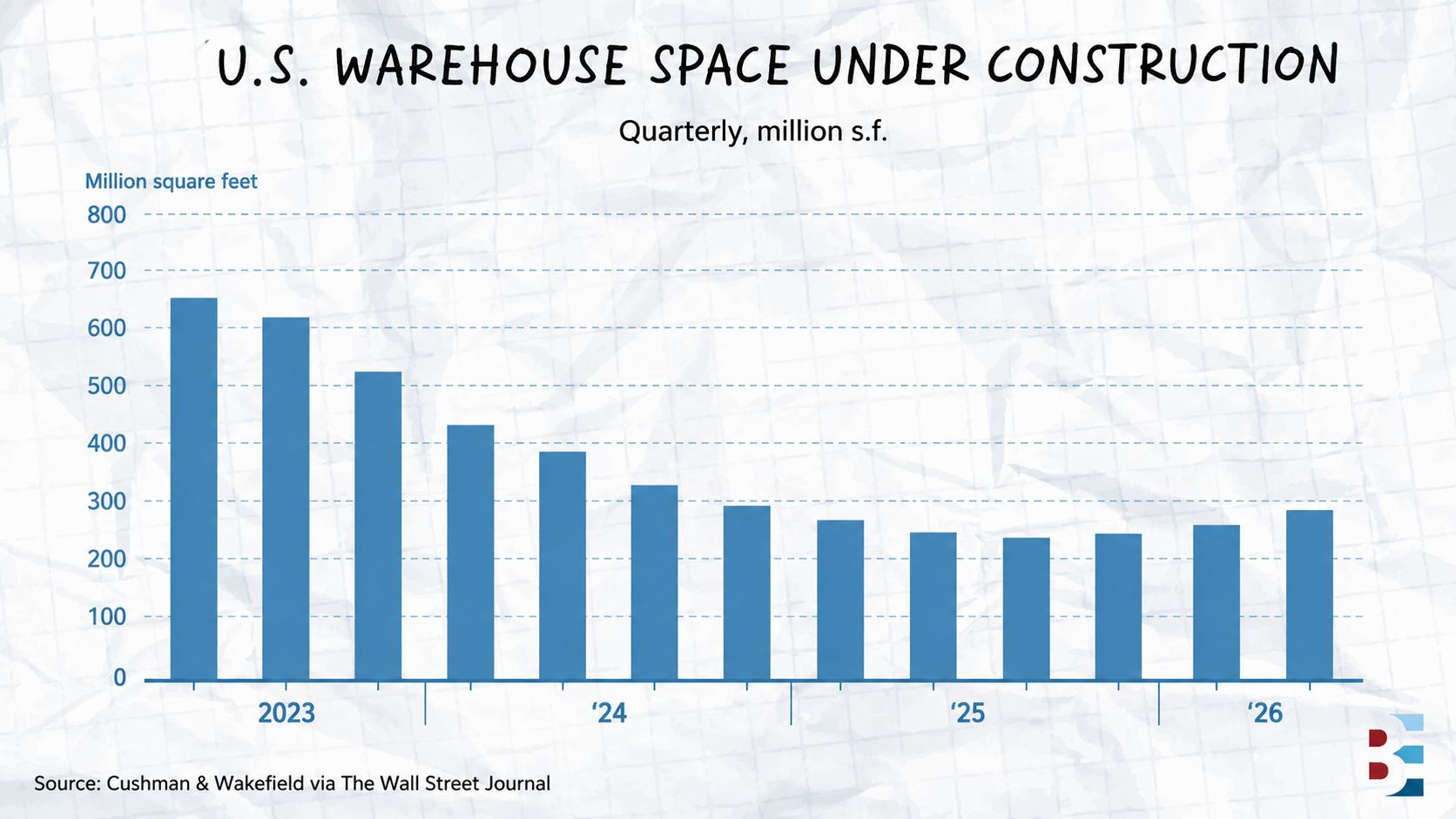
Warehouse developers spent two years on the sidelines, watching vacancy climb to an 11-year high and letting the pipeline drain. That pause is over. More than 305M SF of industrial space was under construction in Q2, up 18% from a year earlier and the second straight quarter of annual growth.
The demand behind the restart looks different from the last boom. Companies leased more space in Q2 than in any quarter since mid-2022, and the tenants driving it are data-center operators and their equipment suppliers, retailers front-loading inventory ahead of tariff changes, manufacturers reshoring production, and third-party logistics firms absorbing outsourced fulfillment.
The Biggest Bet: Prologis plans to start $4.5 billion to $5.5 billion of developments this year, up from $3.1 billion in 2025 — and about 40% of those starts are expected to be data centers.
The Private Push: Panattoni plans to break ground on 62% more square footage this year than last, while preparing land for the next wave.
The Ceiling: Today's pipeline still sits far below the peak of more than 725M SF reached in Q3 2022, and developers describe themselves as cautious rather than aggressive.
Building a warehouse now is a wager that leasing holds up through a possible rate hike, weak consumer sentiment, and an import slowdown later this year. Developers are making it anyway, but this time they’re following demand instead of chasing it.
Most investors diversifying outside of stocks and real estate end up in the same crowded alternatives — gold, crypto, private equity. The problem is that most of them still move with the market in some way when things get uncertain.
Medical receivables don't. Returns come from insurance reimbursements, payments that insurance companies are legally required to make. When markets swing, the bills keep getting paid.
This Thursday, July 23, at 1 pm ET, Ironton Capital's Lon Welsh breaks down how this asset class works, why it has quietly generated 11–13% annual returns for over a decade, and what to evaluate before adding it to your portfolio.
You'll walk away knowing:
📌 Why medical receivables behave differently from every other alternative
📌 How insurance-backed payments create more predictable returns
📌 What downside protection looks like in this asset class
📌 How to evaluate whether it belongs in your portfolio
Can’t make it live? Register anyway, and we’ll send you the replay.
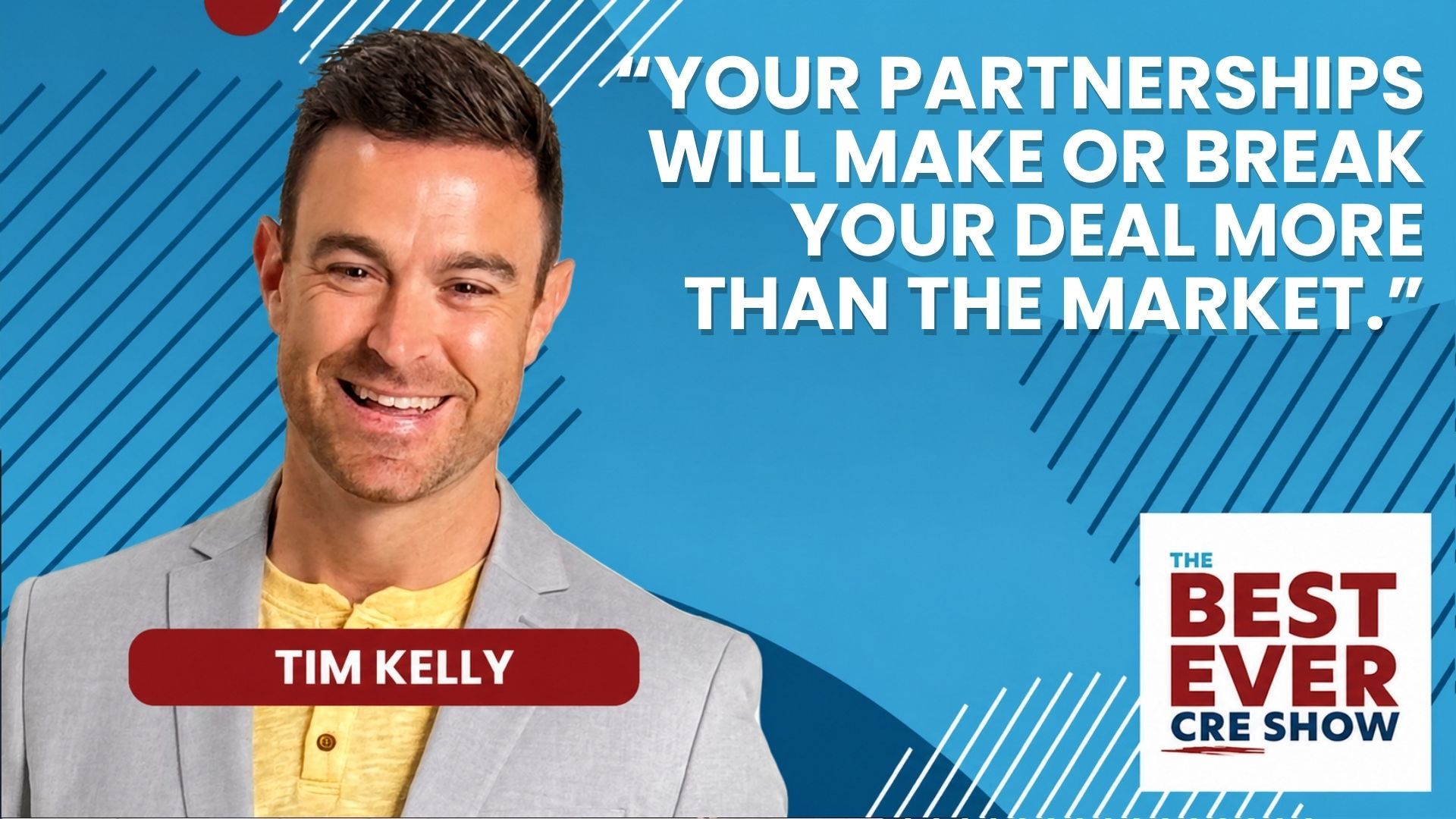
The operators who have survived multifamily's rate shock in recent years didn't get lucky. They adapted out of necessity. Tim Kelly, a capital raiser and multifamily investor buying since 2017, is one of them.
Tim scaled straight into the trouble. When rates skyrocketed almost overnight in 2022, he held GP stakes in deals that defaulted and are still moving through foreclosure, losing his own capital and his investors' along the way.
The worst of them stacked disasters. At one property, a fire wiped out half the units, the insurance payout never came, and the claims are still in litigation. Four years on, with the Fed likelier to hike than cut, higher-for-longer is starting to feel like higher-forever, and the playbook that worked at 3% is likely gone for good.
This week on the Best Ever CRE Show, Tim joined Ash and Amanda to talk through those trouble deals and the rules he operates by today to avoid the same traps.
Communicate on a Schedule: Tim sends investors a monthly email plus a short video update on every deal, and holds that rhythm even when the news is bad. The days of not talking about your losses and only championing your wins are gone forever. Flawless records are nearly impossible to find in 2026. The horror stories, Tim argues, come from silence, when operators bury trouble until investors panic.
Partner Only Where You've Gone Full Cycle: Tim only partners with operators with whom he's already taken a deal from acquisition through disposition. Watching how a partner works through the inevitable rough patches tells him more than any track record on paper.
Find Money That Isn't Debt: The defaults of the last four years came from debt structure, not bad buildings. Today, Tim focuses on all-cash raises and gets creative to find additional capital where possible. He points to a $40 million, 200-unit Indianapolis development that landed $10 million from the city — public money that slashes the loan-to-value and the default risk before a dollar of debt goes on.
Not every operator has a bench of full-cycle partners, and Tim's answer is to build one deliberately: pay to get in rooms with proven sponsors, start with a small allocation, and watch how they communicate through a rough quarter before scaling up. In a market this unforgiving, the partnership test is the cheapest insurance an operator can buy, and it rewards integrity and overcommunication now more than ever.
👉 Listen to Tim’s full episode here.
🙏 Thanks for reading!
Stay in the loop with us! If you received this newsletter from someone else, subscribe here. You can also find us on LinkedIn, Instagram, and YouTube.
Have a Best Ever day!
— Joe Fairless