👋 Hello, Best Ever readers!
In today’s newsletter, operators renegotiate, voters take on property taxes, conversions take a hit, low-rise multifamily wins, a data center conundrum, and much more.
🚨 The Inner Circle is evolving. We've added more value in the last 30 days than ever before, and we're just getting started. See what's new before pricing increases on August 1, and lock in your price for life. Learn more.
🎓 We're going live today at 1 pm ET. Lon Welsh is walking through medical receivables, the asset class quietly generating 11–13% annual returns while markets swing. Register and join here.
Let’s CRE!
🗳️ Ballot Battles: Voters in 13 states will weigh 26 tax initiatives in November, including eight property tax measures across six states. Florida's Amendment 3 alone could cut state and local revenue by $46 billion by 2032.
🏗️ Conversion Hit: Two structural columns have failed at MetroLoft's 1,600-unit conversion of Manhattan's former Pfizer headquarters, halting the country's largest office-to-residential project. New York inspectors are now probing other conversion sites amid a 90,300-unit national pipeline.
🏘️ Renter Leverage: Lease-ups have outpaced new apartment deliveries for the first time since fall 2021, with renters nationally paying 3.7% below advertised rents. Fort Myers leads concessions at 11.2%, followed by Sarasota at 9.2%.
🏦 Equity Gap: LIHTC allocations have jumped as much as 50% through bond financing, but the investor pool has not grown with them. Insurance company yields have climbed to 9.5%, leaving more projects closing with equity shortfalls.
🛎️ Branded Rentals: Marriott has broken from its condo playbook with W Cleveland, a $218 million Erieview Tower redevelopment pairing 200 hotel rooms with 227 rental apartments. Hilton has launched a competing apartment brand.

Multifamily insurance costs have risen more than 75% since 2019, and the standard response — push it into rents — stopped working somewhere along the way. Rent growth is too soft to absorb it, so the increase lands on NOI, and from there on valuation.
Premiums have been climbing upward of 15% annually over that stretch, driven by more frequent disasters, higher reinsurance costs, and spillover from tightly regulated homeowner markets. Research from Harvard's Joint Center for Housing Studies frames the trend as a persistent threat to the existing affordable stock, with shrinking availability making new projects harder to finance.
The levers that remain sit on the underwriting side rather than the market side, drawn from interviews with insurance professionals, policy experts, and affordable housing operators.
Design Against the Peril: Spacing between buildings and firewalls at the site plan stage moderate how insurers assess risk, while fire stops and water overflow sensors reduce loss severity. Those measures carry more weight each year as fire weather grows more frequent and burned areas expand well beyond the West.
Build the Application: A statement of values and a cover letter give underwriters an organized view of the property and the steps ownership has taken. Documented maintenance history becomes part of that record. Limiting the number and duration of claims matters as much, since handling small issues without filing keeps a pattern from pricing into the next renewal.
Absorb the Small Losses: Larger platforms can put balance sheet capacity to work through higher deductibles and deductible reimbursement policies, keeping routine claims out of the traditional program while preserving protection against major losses.
The obstacle sits on the other side of the table. Underwriters have no consistent framework for pricing resilience, a point that surfaced repeatedly at this year's ULI Resilience Summit in Nashville. The evidence exists — homes in coastal Alabama built to the FORTIFIED roof standard filed 73% fewer claims and recorded 72% lower total losses during Hurricane Sally than traditionally built homes — but converting that into a premium credit remains unsettled.
Global insured losses have topped $100 billion for six consecutive years, and that figure is the baseline carriers price against going forward. Premium history and mitigation records are becoming acquisition diligence items rather than post-close cleanup. The operators who spent on hardening and documented it have an argument to make at renewal, with or without a formal credit attached to it.
When we launched the Best Ever Inner Circle, we set out to build a place where experienced commercial real estate operators could come together, solve problems, and help each other grow.
Since then, something exciting has happened.
We've listened to our members, paid attention to the challenges they're facing, and continued asking ourselves one question:
"What would make this even more valuable?"
The result? The Inner Circle has evolved into a true Growth System designed to help members raise more capital, find better deals, strengthen their businesses, and solve challenges faster.
In just the last 30 days, we've added:
💰 Capital Raise Presentations
📊 Quarterly Underwriting Reviews
🛡️ Sponsor Background Checks
⚖️ Legal Strategy Desk
...with AI for CRE Collective Membership, Monthly Pitch Slam, LinkedIn Authority System, and Distressed Deal Pipeline launching soon.
We're investing in this community because we believe it can become one of the most valuable resources a commercial real estate operator has.
⏰ That's why, on August 1, our membership investment is increasing.
If you've been thinking about joining, now is the opportunity to lock in today's pricing for the lifetime of your membership and receive every future enhancement at no additional cost.
LEARN MORE ABOUT THE INNER CIRCLE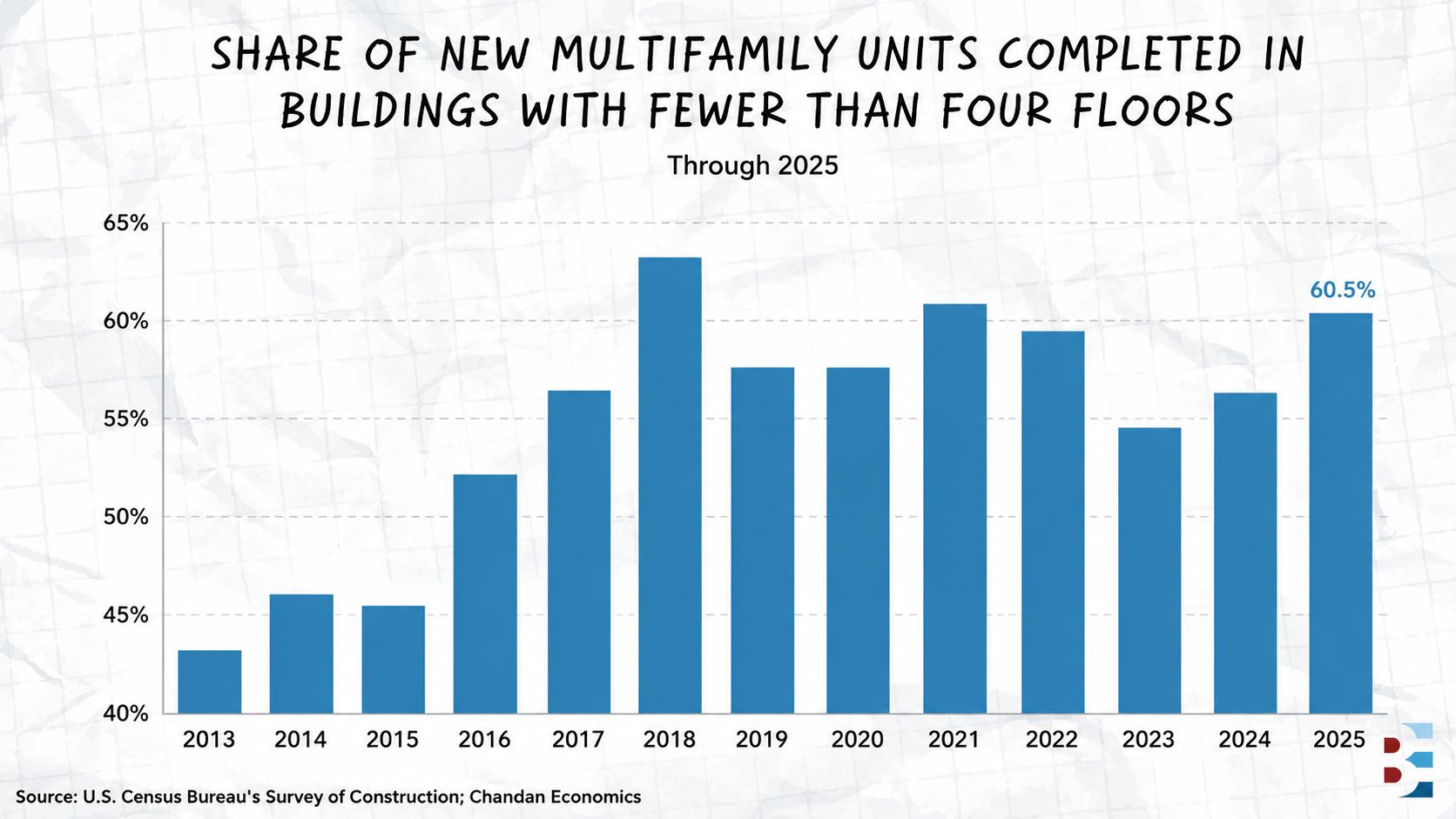
Buildings with at least 50 units accounted for 59.4% of multifamily completions in 2025, up from 55.8% a year earlier and the second-highest share in 50 years. Developers delivered 468,000 units in total, down from 591,000 in 2024.
Low Rise: Properties under four stories supplied 60.5% of new units last year, up from 56.6% in 2024 and above half of all completions every year since 2016.
Multifamily starts jumped 76.2% in June to a seasonally adjusted annual rate of 532,000 units, running 17.2% above June 2025 and pushing overall housing starts up 19%. Permits moved the other direction, falling 4.2% to an annualized 496,000 pace. Apartments under construction now total 682,000 units, exceeding the 582,000 single-family homes currently being built.
Data centers draw more neighborhood opposition than any other building type, with 53% of U.S. residents against one going up in their area. Apartment complexes met resistance from 39% of respondents, and mixed-use development from 32%.
However: Loudoun County, VA, has seen personal property tax revenue climb 639% over 15 years on levies from its 176 data centers, lifting education spending per resident 77% while the county cut homeowner rates.
The U.S. CRE sentiment index reached a three-month moving average of 9.2 in May, up from 7.5 two years earlier. Debt markets have reopened for nearly every property type except office, and monthly transaction volume has recovered from its weakest stretch.

⏰ Today at 1 pm ET
Most investment returns depend on market conditions, investor sentiment, or asset prices holding up. Medical receivables work differently. When a medical bill is purchased, the insurance company is legally obligated to reimburse it. The market can do whatever it wants. The payment still comes.
Today at 1 pm ET, Ironton Capital's Lon Welsh breaks down how investors are turning that mechanic into 11–13% annual returns and what to evaluate before adding this asset class to your portfolio.
Live Q&A at the end. Free to attend.
SAVE YOUR SPOT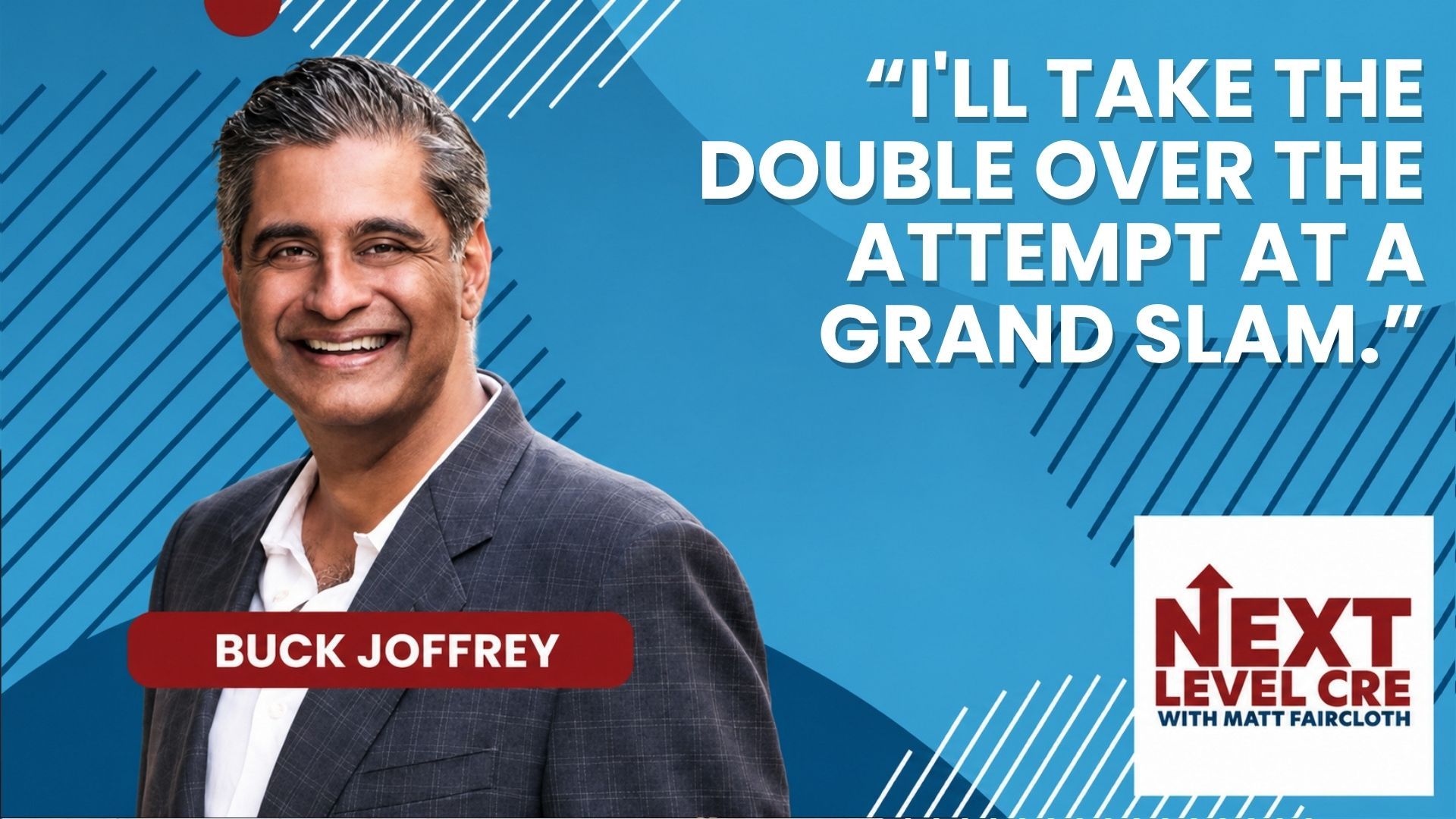
Lenders are handing out keys to 100-unit apartment buildings, and they have more where those came from. Multifamily delinquencies at FDIC-insured banks hit their highest mark since 2013 in Q1. But taking the keys is the easy part. The equity to turn one of those properties around is the hardest money in multifamily to raise.
On a recent episode of the Best Ever CRE Show, Buck Joffrey of the Wealth Formula Podcast joined Matt Faircloth to work through where capital belongs in a market like today's. Matt built the discussion as a choice between two hypothetical deals, simplified from what he's seeing on the ground.
The Deep Discount: A Dallas C-class multifamily property trading near $50,000 a door against a lender basis of $120,000, well below what it would cost to build anything comparable. Occupancy is poor, collections are a problem, and crime comes with it. But whoever takes it owns Dallas workforce housing at a basis no new construction can touch.
The Thin Margin: A Class A multifamily property built within the past 10 years holding 95% occupancy on assumable agency debt in the high 5% range. Cash-on-cash runs 2% to 3%, short of the 6% to 8% preferred return many syndications promise their investors. The loan matures in two years.
Which one would you take?
Both men took the Class A deal, and the reasoning came down to what happens after closing rather than what the seller is asking. A property that covers itself can wait out a slow market. The Dallas deal needs a second check, and raising capital is as hard right now as most operators have seen. Buck's case rests on a rate view, expecting meaningful declines within 24 to 36 months that would turn a thin refinance into a strong one. Matt landed in the same place, betting on a cash-neutral refinance over an operational turnaround.
The Dallas deal still works for an operator with in-house construction crews, a reserve deep enough to carry negative cash flow through the turn, and no short-term maturity pressure. Short any of those three, the discount buys a basis and a business plan that stalls halfway.
Buying at a discount is feasible in this market. Taking that deal full cycle asks for a construction arm, a reserve that absorbs the dip, and a hold period long enough to outlast the debt. Operators without all three are better served by the deal that pays them to wait.
👉 Listen to the full episode here.
🙏 Thanks for reading!
Stay in the loop with us! If you received this newsletter from someone else, subscribe here. You can also find us on LinkedIn, Instagram, and YouTube.
Have a Best Ever day!
— Joe Fairless