Together With

👋 Hello, Best Ever readers!
In today’s newsletter, colleges close, the ROAD to Housing Act moves on, 10 million more renters, a $218 million settlement, and much more.
Today’s edition is presented by Malabar Hill Capital. While others chase the next trendy asset class, MHC executes one laser-focused strategy: building essential neighborhood retail where new Texans already live, shop, and spend. Learn more today.
⏰ Last chance — today at 1 pm ET, two tax incentive experts with $1B+ in identified savings walk through the cost seg mistakes most CRE investors are making right now. One hour. Free to attend. Save your seat.
Let’s CRE!
🏠 Bill Passed: The House has passed the 21st Century ROAD to Housing Act, dropping the Senate's requirement that BTR developers sell properties within seven years, but the two chambers must now reconcile key differences before the bill reaches President Trump's desk.
🏚️ Builder Blowback: Legal liabilities at the nation's two largest home builders have surged, with D.R. Horton's reserves for construction-defect claims rising 57% to $1.1 billion since 2022 as homeowners increasingly challenge arbitration clauses that once kept disputes out of court.
💸 Debt Reckoning: CRE lenders have begun selling distressed debt at discounts ranging from 30% to 85%, with foreclosures on income-producing properties reaching $17 billion in March 2026 — the highest level since the post-financial crisis cleanup — as the industry's extend-and-pretend era winds down.
🏛️ HUD Expansion: HUD has expanded multifamily financing to households earning up to 120% of area median income, positioning government-backed debt as a core capital source for workforce housing as nearly half of middle-income renters have become cost-burdened since 2019.
🛍️ Retail Jitters: Retail real estate leaders at ICSC Las Vegas have flagged rising Treasury yields, elevated construction costs, and slow municipal approvals as growing headwinds, even as leasing demand stays resilient ahead of the back-to-school and holiday seasons.
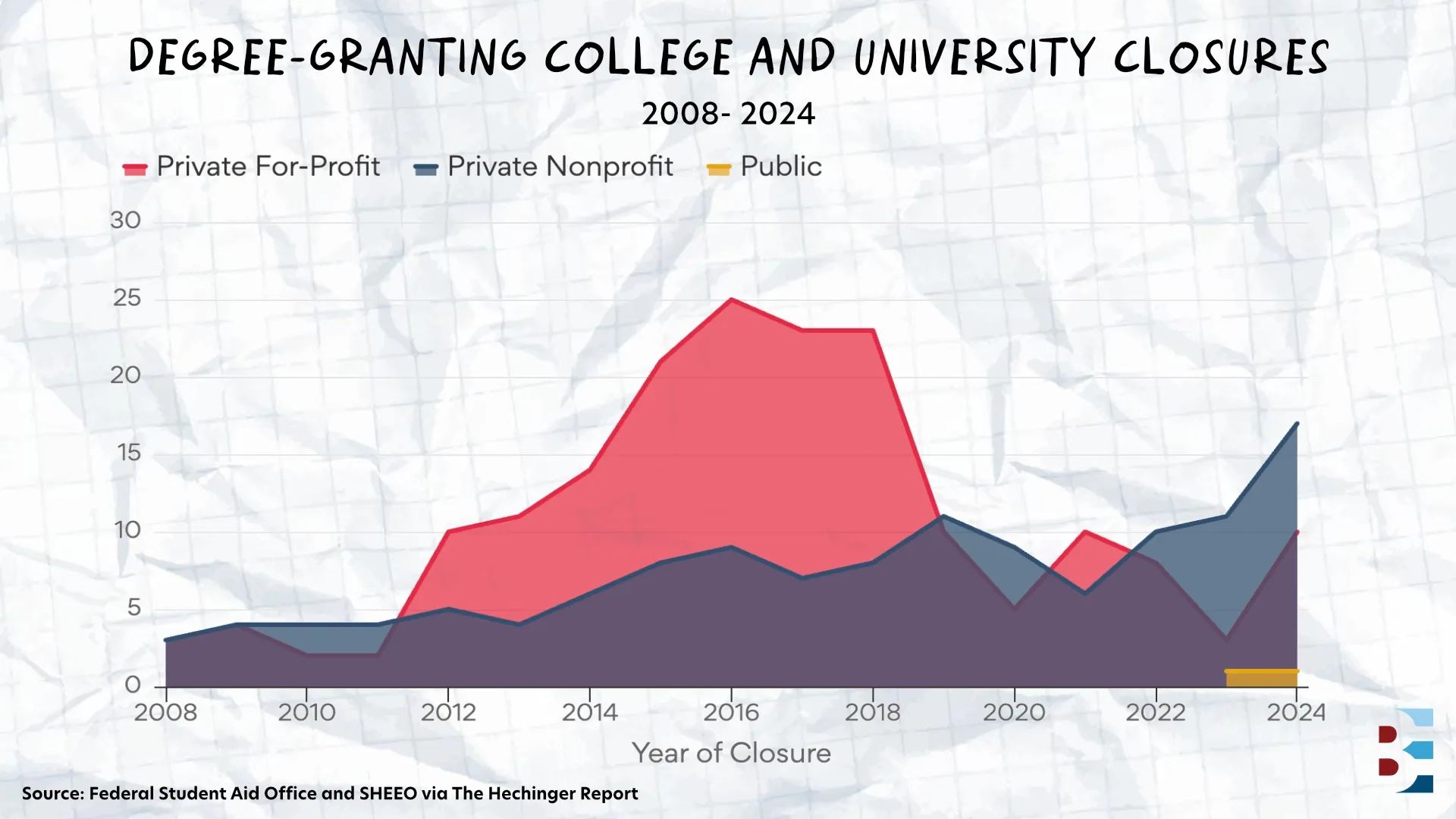
More than 300 colleges and universities have closed since 2008. By the end of the next decade, another 400 are expected to follow. What they leave behind — classroom buildings, dormitories, dining halls, faculty housing, and in some cases hundreds of acres of land — is becoming one of adaptive reuse's most active and least crowded pipelines.
The campuses hitting the market are concentrated in the Northeast and Midwest, where high school graduation rates have fallen off a demographic cliff. Elementary and secondary enrollment dropped 5% in the Northeast and 3.1% in the Midwest between 2014 and 2026 — a leading indicator of college enrollment pressure that has been visible for years.
Closures are accelerating. Twenty-eight degree-granting institutions shut down in just the first nine months of 2024, nearly double the 15 that closed in all of 2023. For developers paying attention, the pipeline is only getting longer.
The Assets on the Table: Shuttered campuses range from 25-acre urban parcels to 130-acre rural properties with dozens of buildings. Urban Land Conservancy acquired a 25-acre Johnson & Wales campus outside Denver in 2021. BH Properties picked up Holy Names University's 60-acre Oakland campus in 2023. Wagner College just agreed to buy St. John's shuttered Staten Island campus. Salem State University and AvalonBay recently received approval to convert part of a campus into 340 luxury apartments.
What's Actually Getting Built: Housing conversions are the most common outcome for well-located campuses. Dormitories and faculty housing convert relatively cleanly into market-rate or affordable units. The University of Massachusetts Lowell is redeveloping part of its campus into an $800 million mixed-use project with nearly 500 housing units, while Vanderbilt's acquisition of California College of the Arts signals that institutional buyers — not just developers — are active in the market.
Where the Deals Break Down: Location is everything. Campuses in rural or depopulating areas often carry severe deferred maintenance and face thin buyer pools. Local politics can kill otherwise viable projects — a 27-acre former campus in Quincy, MA, was set for mixed-use redevelopment before the city intervened and acquired it for $21 million to block higher-density construction. The financing complexity and community opposition that derailed that deal are common enough to price out many operators.
The signal worth watching is demographic: high school graduation rates in a given market are a reliable leading indicator of which regional colleges are next. Developers who map enrollment cliffs against campus real estate can identify acquisition targets before they officially hit the market — often at distressed pricing, with motivated sellers and limited competition.
The college closure wave is a decade-long structural trend, not a cycle. The campuses coming to market over the next 10 years will skew toward the Northeast and Midwest, where housing demand remains real even as enrollment collapses. For operators with the patience to navigate municipal approvals and deferred maintenance, the supply of potential sites is growing faster than the competition to buy them.

The Texas Triangle added over one million new residents last year. That growth creates immediate demand in communities where people already live.
Malabar Hill Capital develops ground-up neighborhood shopping centers inside new
master-planned communities, anchored by service-oriented, triple-NNN tenants with long-term leases.
Their strategy is built on one principle: Eliminate variability at every stage.
They acquire commercially zoned land with infrastructure in place — no land speculation. They hit pre-leasing targets before construction — no spec builds. They merchant build — every project has a defined exit timeline.
The result: Low-variability developments, predictable exits, and target returns of approximately 2x over a 3-4 year cycle.
Key Highlights:
30+ active projects across the Texas Triangle
Triple-NNN national and regional tenants
Defined exit timelines
Malabar Hill Capital is currently accepting accredited investor inquiries for active offerings. To learn more, reach out to Durwesh Khalfe at durwesh@mhcapital.org or click below.
BOOK A DISCOVERY CALL
The U.S. renter pool could grow by 10 million households by 2035, according to Deloitte, pushing the total from 46.2 million to as many as 56.3 million — a 21.7% increase — as rising home prices, elevated mortgage rates, and an aging population push more households toward long-term renting.
Construction input prices are up 6.2% YTD through April — more than the prior three years combined. Diesel fuel has surged 73.8% YoY, asphalt jumped 41% MoM, and nonresidential costs sit 7.4% above year-ago levels with no Fed rate relief expected in 2026.
Eleven multifamily landlords have agreed to pay a combined $218 million to settle antitrust claims tied to RealPage's YieldStar rent-setting software. The settlements require firms to stop using nonpublic rental data in pricing and bring total payouts in the case to more than $360 million.
Single-tenant net-lease retail transaction count rose 23% YoY in 2025, with dollar volume up 20%. Private investors drove roughly 75% of buyer dollar volume as vacancies held below long-term averages and new construction remained near historic lows.

Lon O'Connor and Ed Vettel have collectively identified over $1B in tax savings for real estate investors. The common thread? Most of those opportunities were hiding in plain sight — missed during underwriting, acquisition, or post-close planning.
TODAY at 1 pm ET, they're walking through real-world cost seg examples across multifamily, office, industrial, and manufacturing properties to show you exactly where investors leave after-tax value on the table — and how to stop.
You'll walk away with:
📌 Where investors most commonly miss opportunities
📌 How bonus depreciation changes are reshaping strategy today
📌 A practical framework for your next deal
REGISTER HERE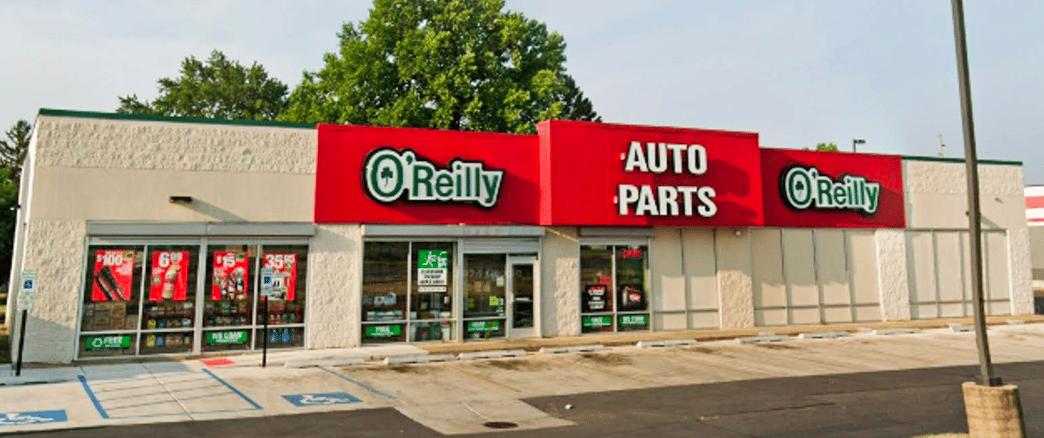
Zane Schartz and the team at Freedom CRE acquired this O'Reilly Auto Parts single-tenant property in South Bend, IN, for $700,000 with just 18 months of lease term remaining. They negotiated an eight-year extension with a rental increase and have the property under contract to sell for $1 million just 15 months later.
Here's how they did it 👇
🏢 Property details: A single-tenant net lease property occupied by O'Reilly Auto Parts, an investment-grade tenant, located in South Bend, IN. The property sits on a major thoroughfare with over 20,000 vehicles per day. The property used to be a Blockbuster Video store.
💸 Finances: The team raised $315,000 in equity capital. They secured a $420,000 loan at 60% LTV with a 6.41% interest rate, 12-month interest-only period, five-year term, 25-year amortization, and 0.5% origination fee.
💼 Business plan: The property had only 18 months of lease term remaining when acquired in March 2025, presenting both risk and opportunity. The strategy was straightforward: acquire the property and negotiate a 5-10 year lease extension with O'Reilly Auto Parts to substantially increase value.
The team successfully executed an eight-year extension with a rental increase, transforming a short-term lease into a long-term stable investment. The property is under contract to sell in July 2026, just 15 months after acquisition.
🍾 Results: The returns for investors after the 15-month hold:
$1 million sale price (under contract)
$300,000 profit on $315,000 initial equity investment
1.73x equity multiple
76.4% total IRR
57.5% annualized IRR
10%+ annualized cash-on-cash
💪 Biggest Challenge: "Wish we could have done it faster, but needed to wait on the tenant to go through their process of lease extensions," says Schartz. "Strong real estate and a happy tenant always makes for a good investment. It is in a very strong market of South Bend, Indiana. The location is off a major thoroughfare with over 20,000 vehicles per day passing it."
👉 If you have a deal you'd like to share with us, please submit it here.
🙏 Thanks for reading!
Stay in the loop with us! If you received this newsletter from someone else, subscribe here. You can also find us on LinkedIn, Instagram, and YouTube.
Have a Best Ever day!
— Joe Fairless