
Together With

👋 Happy Sunday, Best Ever readers!
In today’s newsletter, REITs fall in love, Hilton’s big bet, moving season changes, homeowners flee insurance, and much more.
Today’s edition is presented by Tribevest. Capital raising is becoming more structured, regulated, and professionalized — and sponsors who adapt early gain a real advantage. Learn how experienced Lead Sponsors are building compliant, scalable capital programs by joining the waitlist for the Institute for Structured Capital.
🌀 Stop spinning your wheels trying to figure out every next step. Conference Plus at Best Ever Conference gives you the strategies, systems, and partnerships you need to accelerate your business — all in one upgraded experience. Get your ticket.
Let’s CRE!
📅 Changing Seasons: Summer's reign as peak moving season has collapsed as remote work and new supply have spread demand year-round, shifting rent growth's annual peak from May to March while cutting the growth window from seven months to six.
🔥 Climate Exodus: Nearly half of U.S. homeowners are considering relocating in 2026 due to climate risks as insurance premiums have jumped 24% from 2021 to 2024 and 11 million Americans were displaced by disasters in 2024, with Florida and California topping avoidance lists.
🏙️ The Good Life: Washington D.C. has topped RentCafe's livability rankings, but Midwestern cities Kansas City, Des Moines, and Ann Arbor have claimed three of the top five spots across 149 metros for affordability, wellness amenities, healthcare access, and short commutes.
📦 Adaptive Surge: Self-storage conversions now account for 10% of U.S. inventory with 179M SF repurposed from industrial, office, and retail buildings as developers chase urban markets where adaptive reuse costs 37-50% less than ground-up construction PSF.
🏨 Hilton’s Bet: Hilton has partnered with Placemakr to add 3,000 furnished apartment units, as 28-day-plus bookings have surged 136% since 2019, reaching 46M nights in 2025, driven by contract workers, relocating families, and traveling healthcare professionals seeking flexible rentals.

The RV resort business is shedding its trailer park image and emerging as one of the more compelling niches in the REIT universe. Dominant players are reporting occupancy gains, pricing power, and demographic shifts that would turn the heads of even the most staunch multifamily advocates.
A big reason behind the momentum is that younger, higher-earning RV owners discovering "glamping" culture are willing to pay premium rates for resorts that feel more like country clubs than campgrounds. Amenities like pickleball courts, movie theaters, swimming pools, and clubhouses are becoming standard — and the REITs are capitalizing with aggressive rate increases heading into 2026.
Here's a look at the trends driving the demographic shift:
The demographic upgrade is translating directly into pricing power and occupancy strength:
The window for smaller operators to break into the RV park space isn't completely closed, but it's narrowing. Big players have locked up prime locations near national parks, coastlines, and mountain destinations. Finding developable land in these areas, then navigating local permitting, creates a real barrier. But for operators willing to bet on secondary markets or off-the-beaten-path spots that could benefit from tourism growth, there's still room to build — though competing head-to-head with the REITs on amenities is tough.
For passive investors, RV resorts offer exposure to experiential real estate with genuine pricing power. For operators, the play is identifying emerging destinations before the REITs do — or acquiring underperforming properties in established markets that need operational upgrades. Because the shift from budget camping to upscale resort living is here to stay.

As more sponsors work with capital partners and Independent Capital Aggregators (ICAs), structure and compliance are no longer optional — they’re foundational.
✍️ The Institute for Structured Capital is a new education initiative designed for experienced real estate sponsors who want to move beyond one-off raises and build durable, repeatable capital programs. Through practical frameworks, real-world examples, and infrastructure-first thinking, the Institute helps sponsors understand how to structure Fund-of-Funds programs, work responsibly with ICAs, and scale capital raising without increasing risk.
If you’re focused on doing more deals — and doing them the right way — this is where it starts.
👇 Join the Institute for Structured Capital waitlist.
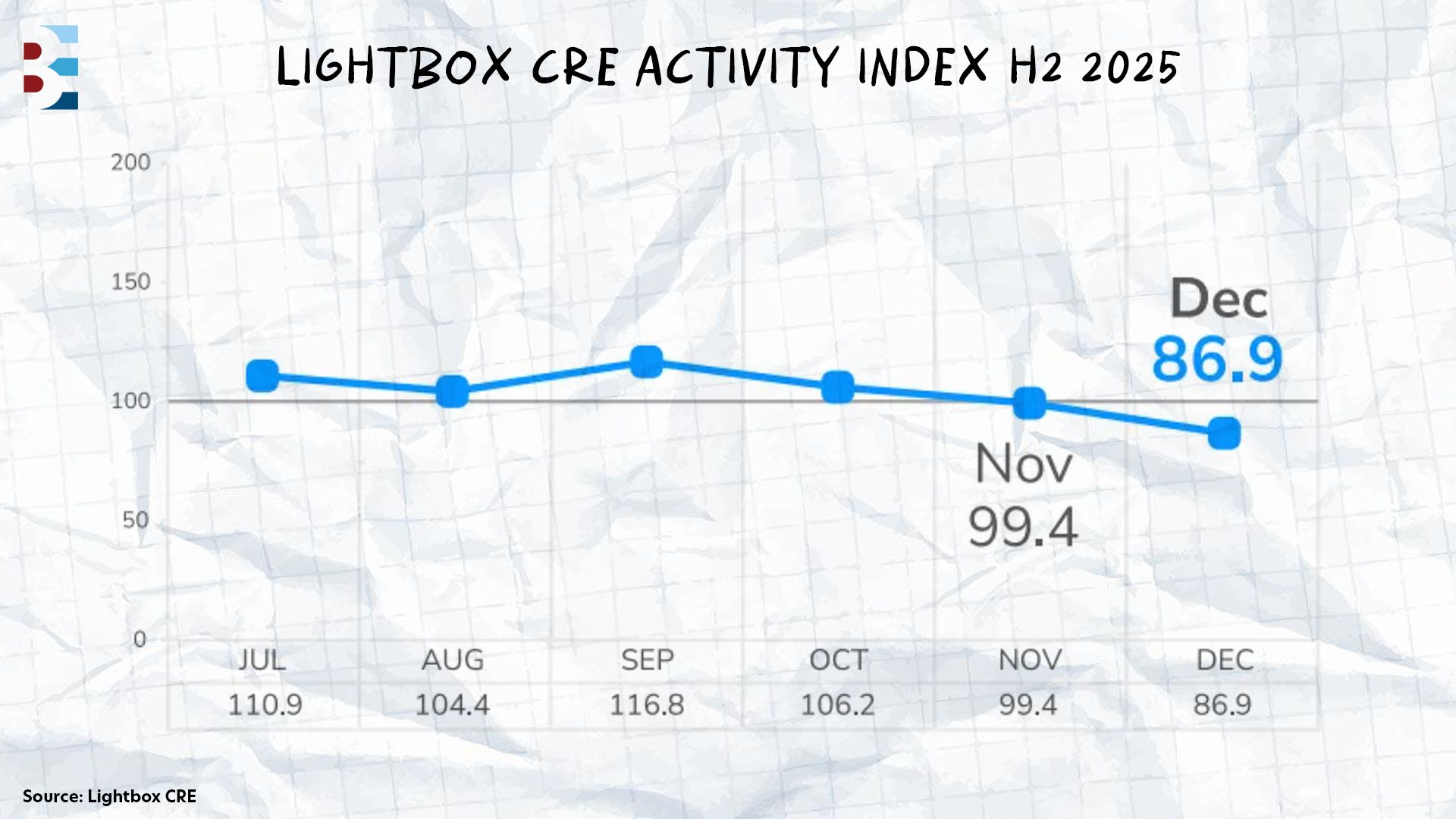
The LightBox CRE Activity Index dropped 13% in December to 86.9, but don't mistake the dip for weakness — it's a typical year-end slowdown that looks nothing like the sharp 30% drop after the 2024 election.
The real story is the year-over-year strength. December 2025 closed 49% higher than December 2024, with listing volume up 55%, appraisals jumping 41%, and Phase I ESA activity rising 48%. These aren't just recovery numbers — they signal genuine seller and lender engagement heading into 2026.
Deal flow stayed surprisingly active through the holidays:
The market enters 2026 in materially stronger condition than a year ago, with modest, selective gains likely as capital deployment continues. With pricing resets narrowing buyer-seller gaps and loan maturities bringing more assets to market, the stage is set for steady, disciplined activity throughout Q1.

📈 Ready to take your BEC experience to the next level? Our Conference Plus ticket ($1,195) is our most popular option — and for good reason.
You'll get everything included in General Admission, plus exclusive access to five game-changing workshops on February 17th:
🕵 You'll also join our exclusive Partner Hunting session — a high-impact experience that helps you identify your role (Visionary or Integrator) and connect with the right people to accelerate your business growth.
GET YOUR CONFERENCE PLUS TICKET
Use code HURRY10 at checkout for 10% off your Conference Plus ticket today. If you’ve already purchased a General Admission ticket and would like to upgrade to Conference Plus, please email us at info@besteverconference.com.
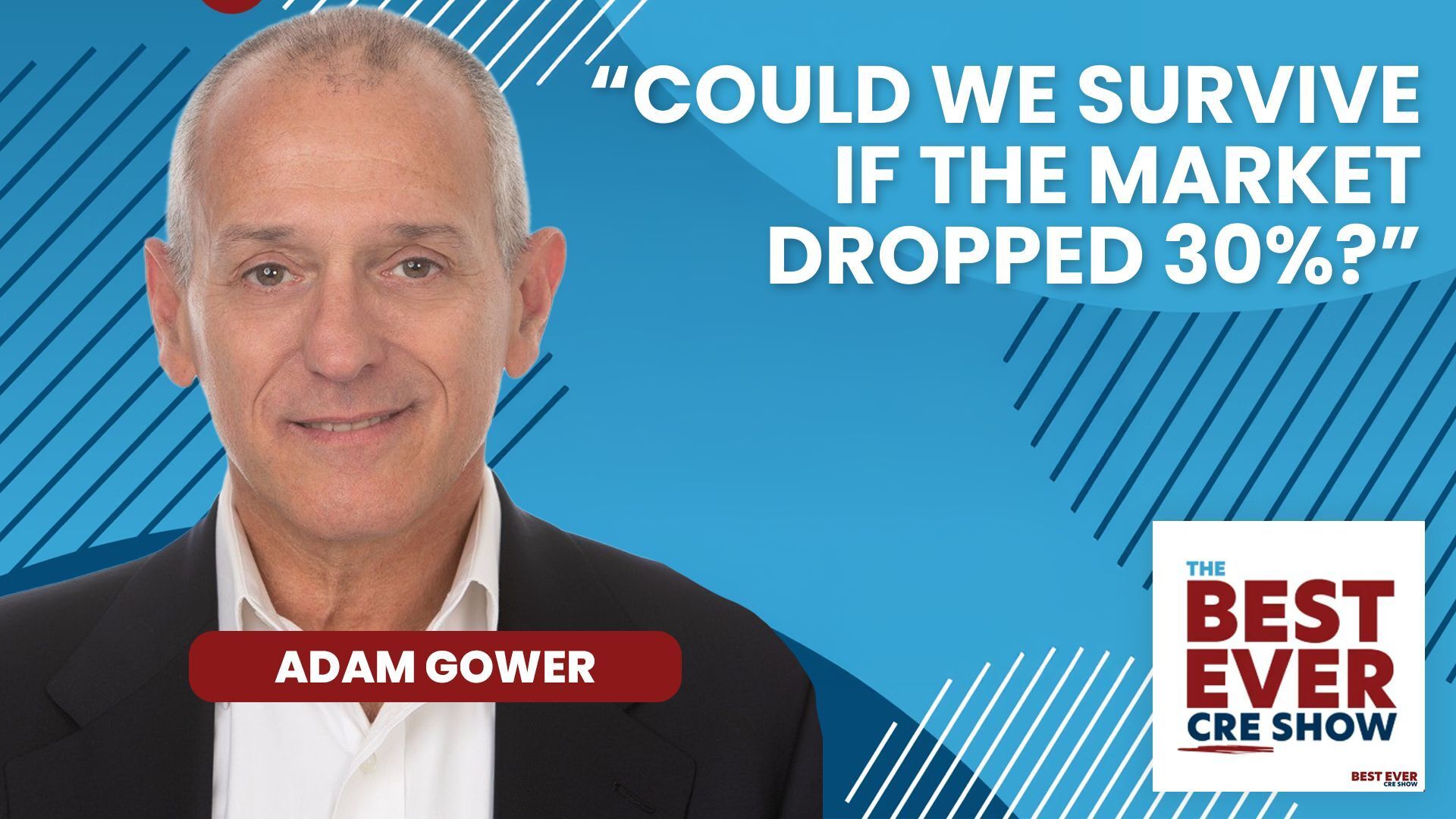
The investors who survived the last three years weren't chasing 22% IRRs. They were the ones projecting 15% returns, underwriting to worst-case scenarios, and watching aggressive competitors implode.
Adam Gower, who has helped sponsors raise nearly a billion dollars, joined the Best Ever CRE Show this week to explain why the highest projected returns often signal the highest risk — and where distressed opportunities are finally surfacing after years of extend-and-pretend.
Gower describes IRR as "the tail that wags the dog" — a metric that's conditioned investors over the past decade to prioritize headline returns over sponsor quality:
Distressed deals are finally emerging, Gower says. Extensions from 2021-2022 vintage loans are coming due throughout 2026, and the sponsors positioned to capitalize are the same ones who underwrote conservatively and built alternate capital pipelines during the boom.
"The guy who stretches the numbers to attract investors based on IRR is more likely to fail — you go from 22% to zero,” Gower says. “The sponsor who projected prudently a 15%? He's still there. He might not be hitting the 15%, but he hasn't lost your money."
🎙️ Listen to Adam's full episode here.
🙏 Thanks for reading!
Stay in the loop with us! If you received this newsletter from someone else, subscribe here. You can also find us on LinkedIn, Instagram, and YouTube.
Have a Best Ever day!
— Joe Fairless


.jpg)