
2019 H2 Cap Rates of the Nation's Top 50 Multifamily Markets

Every 6 months, CBRE releases their bi-annual North American Cap Rate Survey, which calculates cap rates and expected return on cost based on recent transactions and interactions with active investors in markets across the country.
Download CBRE's second half of 2019 report here.
The cap rate is the rate of return based on the income that an asset is expected to generate More specifically, it is the ratio of the net operating income and the current market value of the asset (cap rate = net operating income / current market value). Generally, at the same net operating income, the higher the cap rate, the lower the property value.
In multifamily investing, the cap rate is used by appraisers in order to determine the value of an apartment building being purchased or sold. Therefore, as investors, the cap rate can be used on the front end to help us determine a fair purchase price although it is not as important as cash-on-cash (CoC) return and, if youre an apartment syndicator, the internal rate of return (IRR). However, the cap rate is very important on the back end, because it is used to determine how much the investor or syndicator can sell their asset for, which determines how much profit they can make at sale.
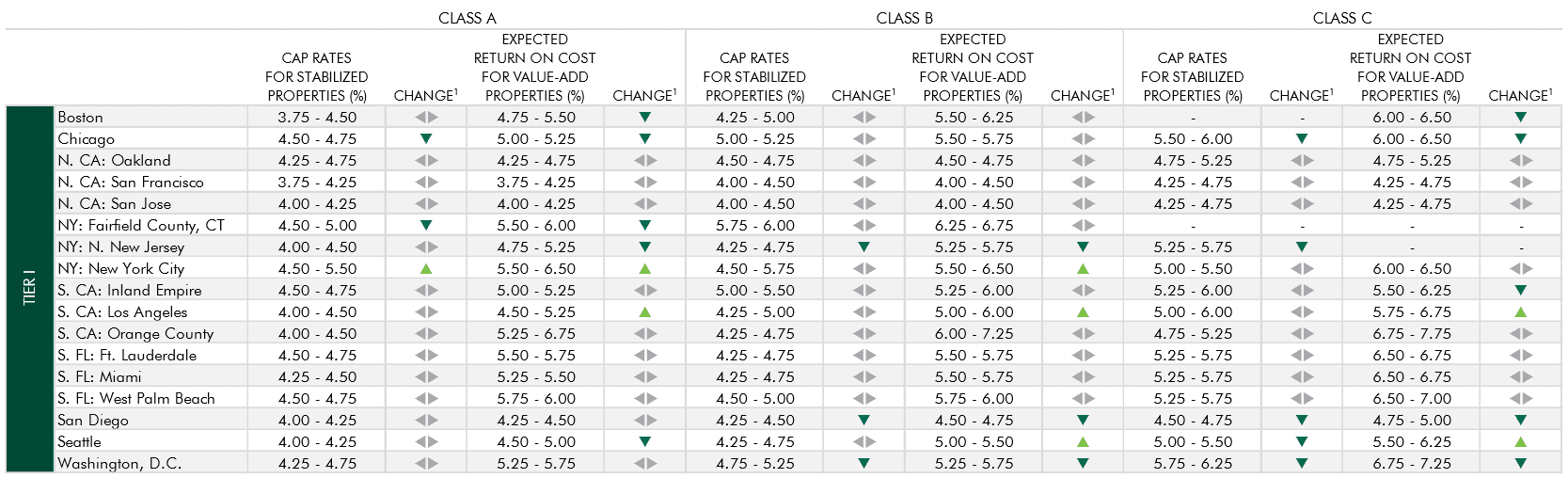
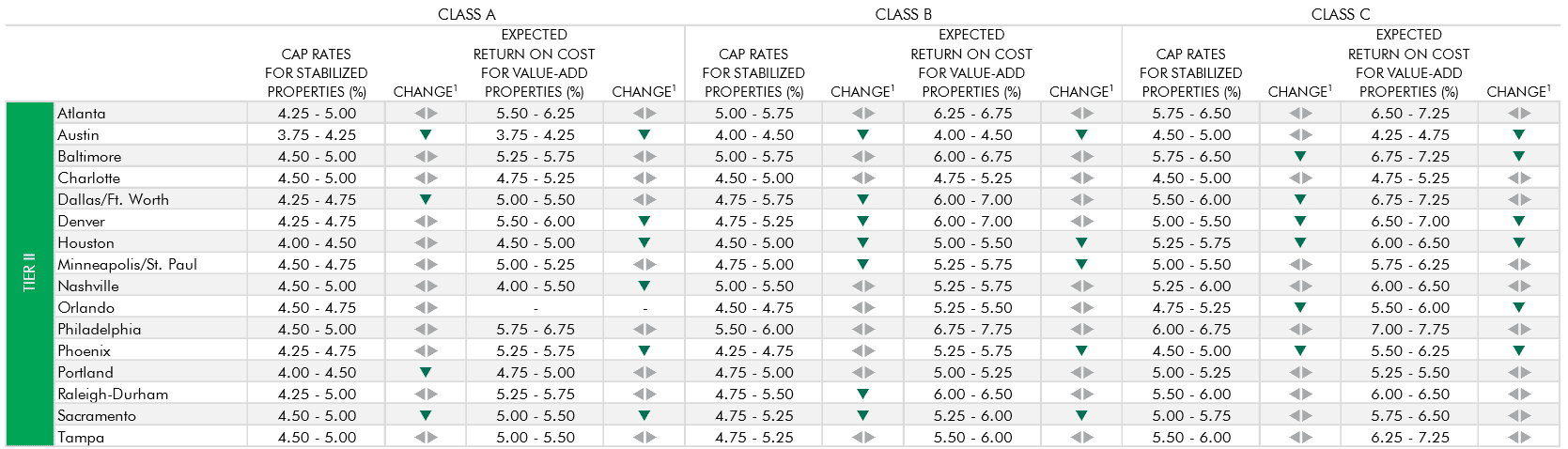
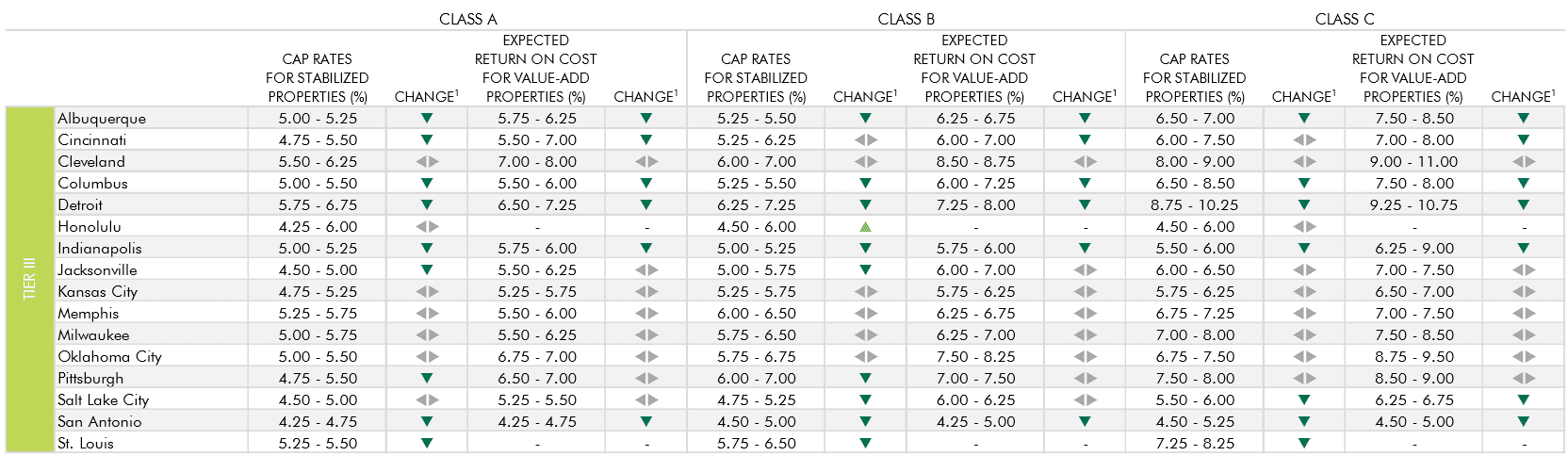
Here are the cap rates at the end of the second half of 2019 of the nation's top 50 tier I, II, and III multifamily markets for Class A, B, and C asset classes .
Tier I Markets
 CBRE Research
Tier II Markets
 CBRE Research
Tier III Markets
 CBRE Research
Are you an accredited investor who is interested in learning more about passively investing in apartment communities?
Click here for the only comprehensive resource for passive apartment investors.